EN
EN AR
AR BG
BG HR
HR CS
CS DA
DA NL
NL FI
FI FR
FR DE
DE EL
EL HI
HI IT
IT JA
JA KO
KO NO
NO PL
PL PT
PT RO
RO RU
RU ES
ES SV
SV TL
TL IW
IW ID
ID LV
LV LT
LT SR
SR SK
SK SL
SL UK
UK VI
VI HU
HU TH
TH TR
TR FA
FA GA
GA LA
LA MI
MI MN
MN

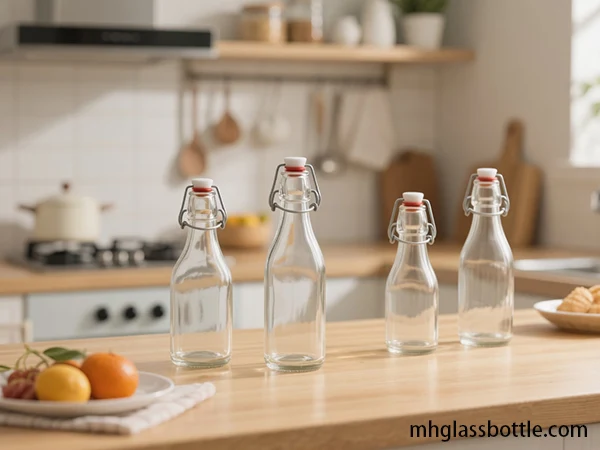
sudden failure.
That’s usually how it starts.
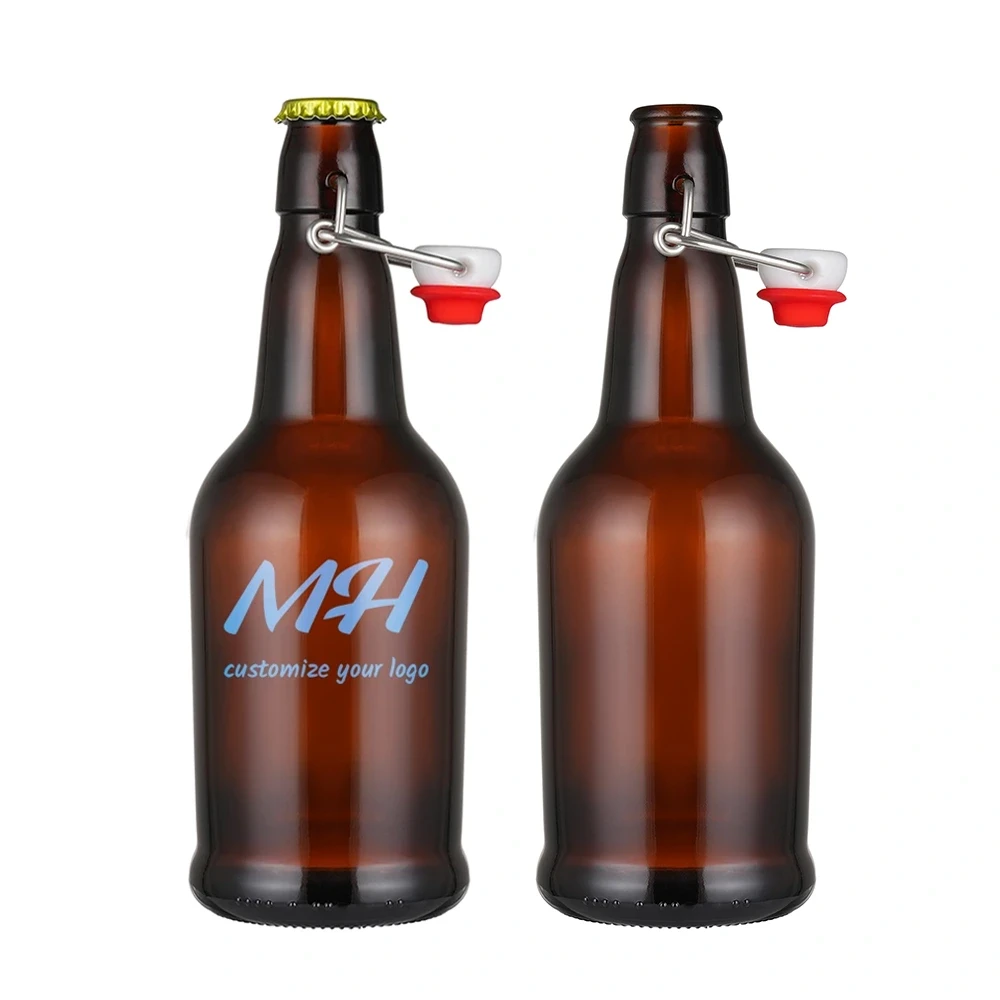
A brewery runs carbonation within “safe limits”—say 2.5 to 3.0 bar in a swing top bottle rated for 4 bar. Everything looks compliant on paper. Pressure gauge says green. QC sheet says pass. Yet a few hours—or a few days—later, bottles begin cracking without warning.
I’ve seen it more than once. And here’s the uncomfortable part: the pressure spec is not the real story.
The glass is.
Why swing top bottle carbonation cracking happens even when pressure is within spec
Let’s be direct.
Pressure rating is not a guarantee of survival. It is a controlled laboratory condition based on ideal glass uniformity, perfect annealing, and zero hidden micro-defects.
Real production glass?
Not ideal.
According to the U.S. Food and Drug Administration food packaging safety framework, packaging must be safe under intended use conditions—but it does not certify resistance to every combined stress scenario like carbonation + thermal shock + micro-defect interaction.
That gap matters.
Because swing top bottle failures are rarely single-cause events. They are stress stacking systems.
The hidden engineering mismatch between “pressure spec” and real-world stress
Three forces are acting at once:
Internal carbonation pressure (CO₂ saturation)
Thermal gradient stress (fill temp vs ambient cooling)
Structural imperfection stress (glass defects)
Most engineers only calculate the first one.
That’s the mistake.
Let’s break it down.
Pressure is uniform—but glass is not
Glass does not fail evenly.
Even when internal pressure is stable at 2.8 bar, stress concentrates at:
Neck transition zone
Mold seam intersections
Bubble inclusion points
Uneven wall thickness regions
A 0.3 mm deviation in wall thickness can increase local stress by over 15–20% depending on geometry.
So when someone says “within spec,” I always ask:
Which point in the bottle did you measure?
Annealing defects—the silent killer no one talks about
This is where most suppliers get defensive.
Annealing is the controlled cooling process that relieves internal stress after forming. If cooling is too fast, residual stress remains locked inside the glass.
That stress does nothing… until carbonation pressure is added.
Then it becomes a trigger.
The European Glass Industry Association technical report on container glass has repeatedly emphasized that residual stress is one of the leading contributors to delayed fracture in reusable glass containers, especially under cyclic loading conditions.
In plain terms:
A bottle can pass inspection today and fail tomorrow under identical pressure.
That’s not theory. That’s production reality.
The 5 real causes of swing top bottle carbonation cracking
Not marketing explanations. Factory-floor causes.
1. Micro-cracks invisible to standard QC
Tiny fractures formed during handling or transport act as stress concentrators.
2. Uneven wall thickness
This creates asymmetric pressure distribution under carbonation load.
3. Mold seam stress concentration
Seams are not just cosmetic—they are structural discontinuities.
4. Gasket compression inconsistency
Over-tight or under-tight swing closures shift stress into the glass neck.
5. Thermal shock from filling temperature mismatch
Cold bottles + warm liquid = immediate internal stress gradient.
Real-world industry pressure: what recent data suggests
Glass packaging demand has increased sharply in beverage exports, especially for craft beverages.
According to the Reuters packaging supply chain analysis 2025, global glass packaging supply chains have faced increased strain due to energy volatility and furnace optimization cycles that prioritize throughput over ultra-fine quality consistency.
That sounds abstract.
It’s not.
It means:
Mold replacement cycles are extended
Annealing furnace energy profiles are compressed
Quality variance increases between batches
And that variance shows up exactly where buyers least expect it: carbonation performance.
| Factor | Lab Testing | Real Production Reality |
| Pressure load | Controlled | Variable (temp + fill + transport) |
| Glass uniformity | Ideal | Variable batch-to-batch |
| Stress history | None | Multiple handling stages |
| Defect rate | Near zero | Always present |
So when a bottle cracks at 2.5 bar in real use, it is not contradicting physics.
It is revealing missing variables.
How manufacturers actually test swing top bottles
Real industrial QC is more layered than most buyers realize:
Internal hydrostatic pressure testing (burst threshold)
Thermal shock cycling (hot → cold transitions)
Polarized light stress inspection (detects hidden strain)
Drop and impact simulation
Closure cycling fatigue tests (10–30 reuse cycles)
But here’s the gap.
Most suppliers test samples, not full production variability.
That’s the blind spot.
The lifecycle failure pattern no one markets
Swing top bottles do not fail randomly.
They follow a pattern:
Cycle 1–5: no visible issues
Cycle 6–12: micro-stress accumulation begins
Cycle 12–20: crack initiation under carbonation
Cycle 20+: unpredictable fracture under moderate pressure
This is why reuse claims are often misleading without lifecycle data.
Comparison: Safe pressure vs real failure risk
| Condition | Lab-Rated Behavior | Real-World Behavior |
| 2.5 bar carbonation | Safe | May still crack |
| 3.0 bar carbonation | Safe | Risk increases with defects |
| 3.5 bar carbonation | Near limit | High failure probability if micro-defects exist |
| Same bottle reused 15+ times | Stable | Stress accumulation likely |
Why swing top closure systems make it worse
Swing top systems introduce mechanical stress at the neck interface.
Unlike crown caps, which distribute force evenly, swing closures create:
Point-load compression zones
Uneven gasket pressure distribution
Torque-dependent sealing variation
So even if internal pressure is stable, external closure stress is not.
That combination is dangerous.
FAQs
What causes swing top bottle carbonation cracking even under safe pressure?
Even if pressure is safe and within the glass's physical capacity, hidden defects like uneven wall thickness, residual annealing stress or micro-cracks can magnify the local stress beyond the glass's actual tensile strength, resulting in a top bottle cracking when it is not being used for swing top.
That is, pressure specs are not a sufficient measure of safety in actual production situations.
Can swing top bottles be used for carbonation?
When produced using appropriate annealing, even wall thickness and pressure resistance testing, swing top bottles can be used for carbonation purposes, usually up to 3-4 bar, as determined by the design specifications and the integrity systems of the closures.
But safety would not be guaranteed by “rated” pressure only, but manufacturing consistency.
Why do some bottles break when they are repeatedly used?
The reason of the failure of all plastic bottles to be reusable is that after multiple carbonation cycles, the molecular bonding is weakened by micro-stress fatigue in the bottle glass, and it breaks under moderate pressure.
This is a progressive failure that occurs over time, rather than an event failure.
How do manufacturers test carbonation resistance?
Carbonation resistance testing involves hydrostatic pressure testing, thermal shock cycling, and fatigue simulation across multiple reuse cycles to determine the maximum safe internal pressure and lifecycle durability under real production conditions.
These tests simulate both pressure and environmental stress combinations.
Can micro-defects really cause bottle explosions?
Micro-defects in swing top bottles can cause explosive failure because they act as stress concentration points where internal carbonation pressure exceeds localized tensile strength, leading to sudden crack propagation across the glass structure.
Even small inclusions can significantly reduce structural safety margins.
Final thought from the production floor
pressure lies.
Glass doesn’t.
And the biggest misconception in carbonation packaging is believing that a number on a spec sheet can fully describe how a living production system behaves under real industrial stress.
If you are sourcing swing top bottles at scale, the question is not just “what is the pressure rating?”
It is:
What invisible stress is already inside the glass before I ever fill it?
CTA
If you are sourcing swing top bottles for carbonated beverages, we can provide full engineering data including pressure test curves, annealing reports, wall thickness mapping, and cycle fatigue testing to help you avoid hidden failure risks.
Request a sample and QC report before your next bulk order.
Table of Contents
- Why swing top bottle carbonation cracking happens even when pressure is within spec
- The hidden engineering mismatch between “pressure spec” and real-world stress
- Annealing defects—the silent killer no one talks about
- The 5 real causes of swing top bottle carbonation cracking
- Real-world industry pressure: what recent data suggests
- How manufacturers actually test swing top bottles
- The lifecycle failure pattern no one markets
- Comparison: Safe pressure vs real failure risk
- Why swing top closure systems make it worse
- FAQs
- Final thought from the production floor
- CTA
 ONLINE