EN
EN AR
AR BG
BG HR
HR CS
CS DA
DA NL
NL FI
FI FR
FR DE
DE EL
EL HI
HI IT
IT JA
JA KO
KO NO
NO PL
PL PT
PT RO
RO RU
RU ES
ES SV
SV TL
TL IW
IW ID
ID LV
LV LT
LT SR
SR SK
SK SL
SL UK
UK VI
VI HU
HU TH
TH TR
TR FA
FA GA
GA LA
LA MI
MI MN
MN

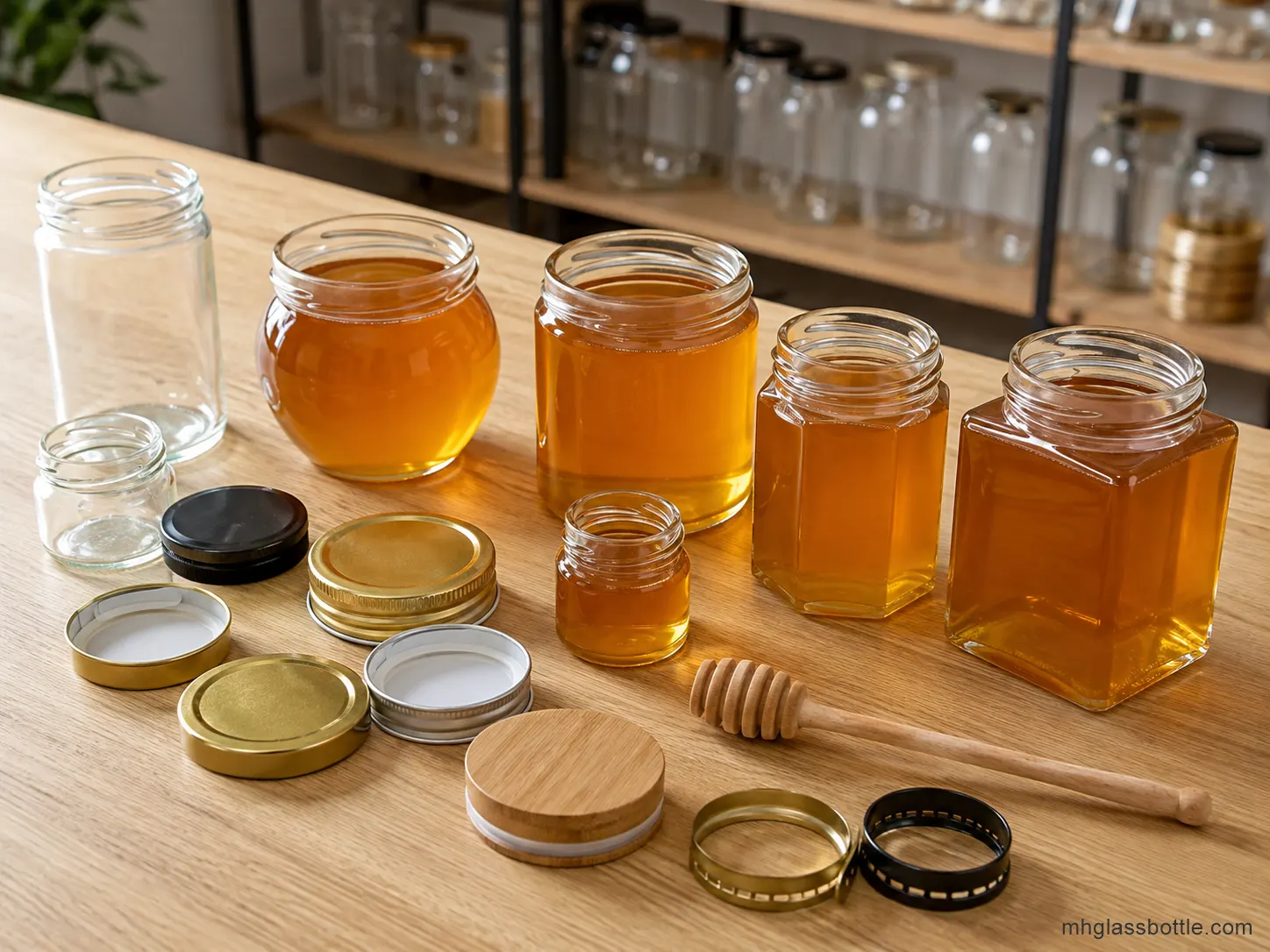
Glass jars for honey packaging are obtained from three different sources: the direct glass manufacturers, the packaging wholesalers and the local suppliers of beekeeping material. A direct manufacturer will be a better choice with bulk order, private label, or custom orders. Lower quantities with fast delivery in country can easily be handled by wholesalers and standard jars by the case can be had from beekeeping suppliers.
The right source depends on more than unit price. Jar capacity, honey fill weight, neck finish, lid liner, decoration, order volume and destination market all affect whether a supplier can support a commercially reliable packaging program.
Who Actually Supplies Glass Honey Jars?
The market is not made up of one type of seller. Each supplier category solves a different purchasing problem.
| Supplier type | Best suited to | Typical order pattern | Customization level | Main limitation |
|---|---|---|---|---|
| Direct glass jar manufacturer | Honey brands, food packers, importers and packaging distributors | Pallet, container or repeat production orders | High: shape, capacity, color, embossing, printing and closures | Higher project MOQ and longer planning cycle |
| Packaging wholesaler or distributor | Growing brands that need stock jars quickly | Case, pallet or mixed-SKU orders | Moderate: labels, stock lids and some decoration | Higher unit cost and less control over production |
| Beekeeping supply company | Small apiaries, farm shops and seasonal producers | Case quantities | Low: mainly standard honey jar formats | Limited bespoke development and export support |
| Sourcing or trading company | Buyers purchasing jars, lids, labels and accessories together | Consolidated multi-product orders | Varies by partner factory | Less direct visibility into the actual factory |
This distinction matters. A supplier advertising “wholesale honey jars” may hold domestic stock but manufacture nothing. Another may operate glass production lines but require a larger minimum order. Buyers should identify the business model before comparing quotations.
When Should You Buy Directly from a Glass Jar Manufacturer?
Buying direct makes the most sense when the packaging has to become a repeatable part of the brand rather than a one-time container purchase.
A manufacturer is normally the right choice when you need:
- Repeat orders in pallet or container quantities
- A stable jar profile across several production runs
- Custom screen printing, decals, labels, frosting, coating or embossing
- A proprietary mold or an existing shape with a modified finish
- Coordinated jars, metal lids, bamboo lids, tamper seals or honey dippers
- Export cartons, palletization and shipping documentation
For an initial market test, however, a local wholesaler may be cheaper overall even if its unit price is higher. Domestic stock avoids mold investment, international freight and a large first order. Once monthly demand becomes predictable, moving to a direct manufacturer can improve customization and landed cost.
The reasons for glass use in the packaging of honey.
Glass provides a clear window for the honey to show its color, clarity and crystallization, and has a hard substance that labels and decorations can be attached to. It is also applicable to mass-market, organic, raw-honey and premium gift positioning.
The Food and Agriculture Organization of the United Nations recommends that the most common pack materials for pure honey are those made from glass and makes a point of emphasizing the need for a tight, airtight lid. The guidance also highlights that screw-top lids on glass jars are particularly secure on the jar.
That last detail deserves attention. The jar body is only one part of the package. The cap, liner, gasket, ink, coating and adhesive may also fall within food-contact requirements. In the United States, the FDA defines packaging and its components as food-contact substances. Components used under the applicable conditions must comply with relevant authorizations, including provisions in 21 CFR Parts 174–179.
The general safety of food-contact materials, materials used for packaging and other uses is required in accordance with Regulation (EC) No 1935/2004 of the European Union. Further, the European Commission classifies food contact materials in accordance with GMP in Regulation (EC) No 2023/2006.
A credible honey jar supplier should therefore discuss the complete package, not simply say that the glass is “food grade.”
Which Glass Jar Shapes Work Best for Honey?
There is no single best jar. The correct format depends on the product tier, filling equipment, label design and retail channel.
| Jar style | Best use | Commercial advantage | Point to verify |
|---|---|---|---|
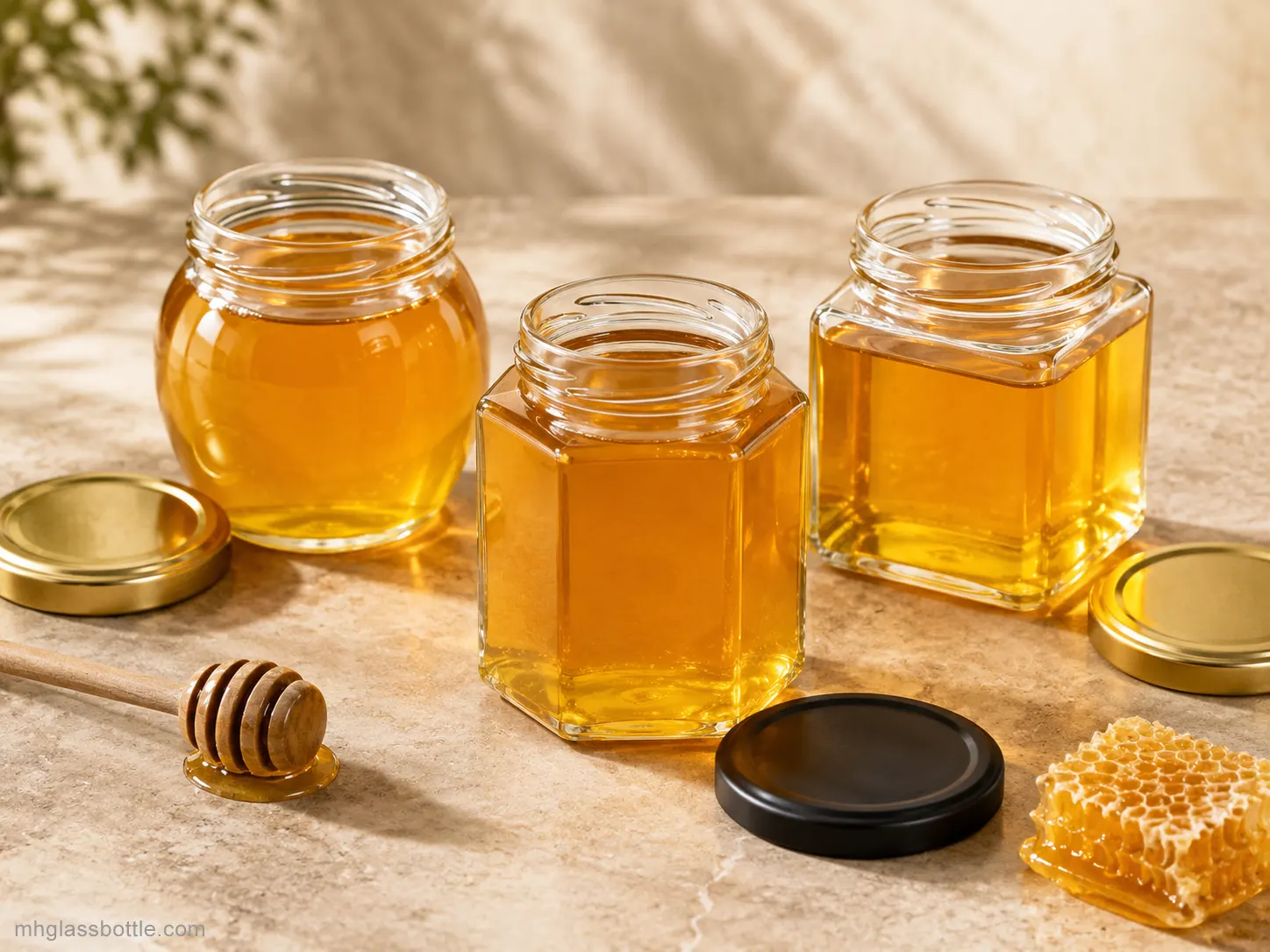
| Round or classic honey jar | Core retail range | Familiar shape and efficient production | Label panel and line compatibility |
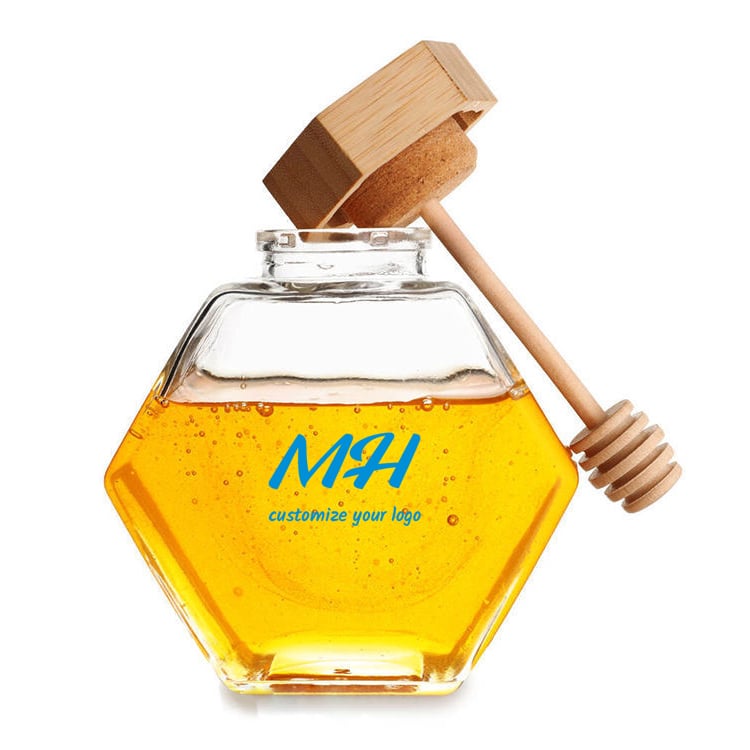
| Hexagonal jar | Artisan or gift honey | Distinctive shelf appearance | Corner protection during transport |
| Square jar | Premium retail and gift sets | Strong branding panels and compact shelf layout | Carton dividers and impact points |
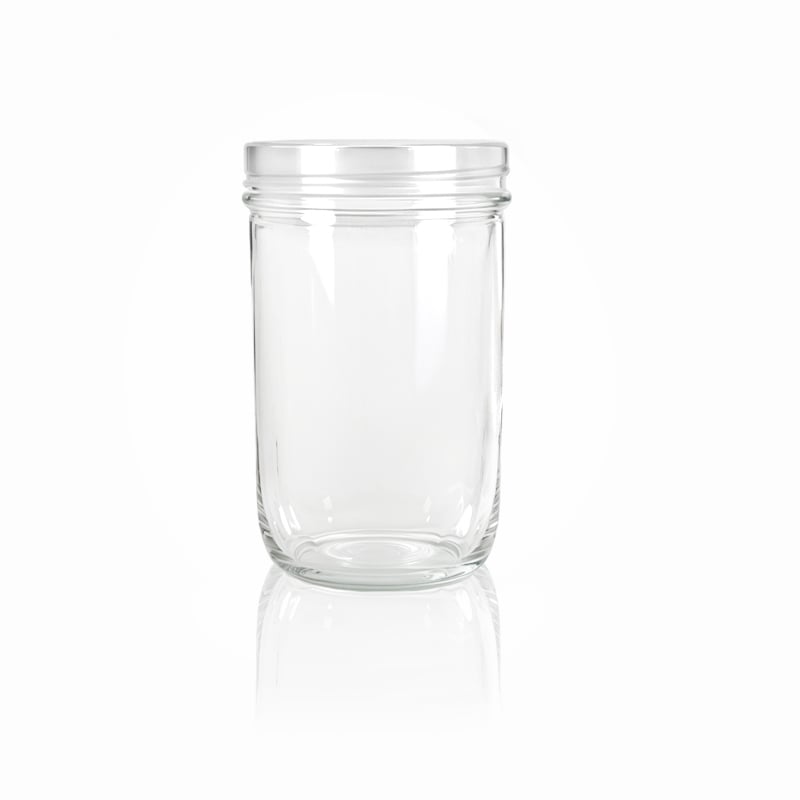
| Straight-sided or Mason-style jar | Modern private-label ranges | Large label area and wide opening | Correct thread and lid availability |
| Mini jar | Samples, hotels and gift boxes | Low serving size and high perceived value | Filling accuracy and decoration cost |
| Large family-size jar | Foodservice or value packs | Lower packaging cost per kilogram | Filled weight and handleability |
One frequent sourcing error is treating milliliters and grams as interchangeable. Honey is normally sold by net weight, while a jar drawing may show nominal or brimful volume. Ask the supplier to perform a fill test with the actual honey—or provide its density and intended headspace—before approving the jar size.
Which Lid Is Suitable for a Glass Honey Jar?
Metal lug caps and continuous-thread screw caps are the most common options for commercial honey packaging. Both can be supplied with food-contact liners, but the correct cap depends on the jar’s exact neck finish and the filling process.
Consider these closure options:
- Metal lug cap: Fast to apply and widely used for food jars. Confirm the lug finish, liner specification and application torque.
- Continuous-thread cap: Familiar and resealable. Match the cap diameter and thread specification to the glass finish.
- Bamboo or wooden lid: Useful for premium gift packaging. It normally requires a suitable gasket or inner sealing system and should be tested for transport and shelf-life conditions.
- Cork stopper: Visually distinctive but less suitable when an airtight retail seal is the main priority. A secondary tamper-evident seal may be required.
Do not approve lids from appearance alone. Request assembled samples and test leakage, torque, liner contact, opening force and tamper-evident components under the expected storage and shipping conditions.

How Do You Evaluate a Honey Jar Supplier?
A low quotation is not useful if the jar changes between batches, the lids do not fit or the shipment arrives with excessive breakage. Use the following checks before placing a bulk hondy jars order.
1. Confirm whether the company is a manufacturer or reseller
Ask for the factory address, production-line information, current product drawings and recent export experience. If the seller outsources production, clarify who controls the mold, quality standard and corrective action process.
2. Request technical specifications
The specification should state more than nominal capacity. Ask for brimful capacity, jar weight, height, maximum diameter, neck finish, label panel, closure specification and packing method. Set acceptable tolerances before mass production.
3. Evaluate the complete closure system
Confirm the cap material, liner or gasket, coating, torque requirement and tamper-evident option. A jar and lid purchased from different sources should never be assumed compatible merely because both are described as the same diameter.
4. Review food-contact documentation for the destination market
Request documentation that applies to the glass, closure liner, printing and other components that may contact the food. “FDA approved” is too vague by itself; the supplier should be able to identify the material, intended use and applicable test or regulatory basis.
5. Inspect samples before bulk production
Fill samples with the actual product. Check headspace, closure performance, label fit, decoration adhesion, filling-line handling and carton protection. If the honey is warmed for filling, tell the supplier the expected fill temperature so the correct test conditions can be discussed.
6. Make comparisons to landed cost (not just jar price)
Don't forget lids, decoration, inner packaging, cartons, pallets, inland transport, sea or air freight, insurance, duty and local handling. A lighter jar could also lower freight and be able to make the trip along the distribution route.
7. Define quality control in the purchase order
Agree on the approved sample, drawings, tolerances, appearance limits, sampling plan, packaging standard and procedure for nonconforming goods. This creates a measurable standard for repeat orders.
How Glass Honey Jars at the Wholesale Price?
Key cost drivers are the weight of the jars, production method, order quantity, closure, decoration, mold requirements, carton configuration and freight.
Stock jars with standard caps usually have the lowest entry cost. A new embossed or proprietary shape requires mold development and sampling before production. Multi-color printing, special coatings, bamboo components, individual boxes and complex gift sets add both material and handling costs.
The comparison could totally shift if freight is taken into account. Glass is heavy and breakable, so make sure that the buyer has the right buying options: units per carton, units per carton of carton per pallet and carton per container. The minimum ex-factory (F.O.B) price does not guarantee the lowest delivered price.
The mining as a Direct Glass Honey Jar Manufacturers.
For honey brands, food manufacturers and packaging distributors, Minghang Glass Packaging provides standard and custom glass jars. The company was founded in 2008 in Jiangsu, China, and has six production lines with an export of various types of glass packaging to countries in North America, Europe, Oceania and Asia.
Honey packing materials can be made of round or square jar, hexagonal or wide-mouth jar, metal, bamboo and other materials that are compatible with honey-packaging jars, and the materials used for marking the jar include screen printing, labels, decals, laser decoration, embossing, frosting, coating, hot stamping etc. Position, quantity and budget determine the development of a project around an existing mold or a custom jar design.
Before quotation, the sales and engineering teams review the intended fill weight, jar capacity, closure, decoration, destination market and order volume. Standard samples of three to five pieces can be provided for evaluation, with sample freight paid by the buyer.
What Information Should You Send for an Accurate Quote?
Send the following details in the first inquiry:
- Honey net weight per jar
- Preferred jar capacity and shape
- Lid material, color and sealing requirement
- Initial order quantity and expected annual demand
- Label, printing, embossing or coating requirements
- Filling method and approximate fill temperature
- Destination country and delivery port or postcode
- Required certification, testing or compliance documents
If the exact jar is undecided, send a reference image and target retail price. A capable supplier can then recommend an existing mold before discussing the cost of a completely custom design.
Frequently Asked Questions
Who provides the glass jars for getting honey packaged?
Glass jars used for the packaging of honey are provided by direct glass manufacturers, glass packaging wholesalers and beekeeping supply companies. Manufacturers are typically appropriate for Bulk and Custom orders, wholesalers for smaller orders, made quicker; and Beekeeping suppliers for regular jars for Apiaries and Farm Stores.
What is the best glass jar for honey?
The best glass jar for honey has an appropriate fill capacity, a secure airtight closure, enough label space and dimensions compatible with the filling line. Round jars suit mainstream ranges, while hexagonal and square jars are often selected for premium or gift packaging.
Are glass honey jars sold by volume or honey weight?
Glass jars are usually specified by volume, but packaged honey is commonly sold by net weight. Because honey and water have different densities, buyers should confirm the intended honey weight, jar brimful capacity and headspace with a physical fill test.
Can a manufacturer make special honey jars?
Yes. The manufacturer of a glass jar can shape and size the jar, add a variety of colors, embossing designs, label panel, closure, and decoration to the surface. A proprietary shape will necessitate a mold design, sampling and a larger commitment for production; using an existing mold will normally be quicker and less investment.
What is the minimum order quantity of wholesale glass honey jar?
MOQ varies from supplier to supplier and specification. Wholesalers can sell by the case or pallet, or direct manufacturers can quote production quantities according to the jar, closure and decoration, or use either an existing or a custom mold. Each one of the buyers should ask for the MOQs separately for stock and fully customized products.
How should I test a honey jar before ordering in bulk?
Fill the assembled sample with the actual honey and evaluate net weight, headspace, leakage, torque, label fit, decoration adhesion and carton protection. Also test the jar on the intended filling and capping equipment and disclose any warm-fill conditions to the supplier.
Source Glass Honey Jars for Your Next Product Line
Choosing a honey jar supplier starts with the business model: local stock for a small launch, or direct manufacturing for repeat volume and customization. Once the route is clear, compare the complete package—jar, lid, liner, decoration, documentation and delivered cost.
Send Minghang your target honey weight, reference jar, closure preference, quantity and destination. We can recommend suitable existing models, prepare samples and quote stock or custom glass honey jars for your market.
Table of Contents
- Who Actually Supplies Glass Honey Jars?
- When Should You Buy Directly from a Glass Jar Manufacturer?
- The reasons for glass use in the packaging of honey.
- Which Glass Jar Shapes Work Best for Honey?
- Which Lid Is Suitable for a Glass Honey Jar?
-
How Do You Evaluate a Honey Jar Supplier?
- 1. Confirm whether the company is a manufacturer or reseller
- 2. Request technical specifications
- 3. Evaluate the complete closure system
- 4. Review food-contact documentation for the destination market
- 5. Inspect samples before bulk production
- 6. Make comparisons to landed cost (not just jar price)
- 7. Define quality control in the purchase order
- How Glass Honey Jars at the Wholesale Price?
- The mining as a Direct Glass Honey Jar Manufacturers.
- What Information Should You Send for an Accurate Quote?
-
Frequently Asked Questions
- Who provides the glass jars for getting honey packaged?
- What is the best glass jar for honey?
- Are glass honey jars sold by volume or honey weight?
- Can a manufacturer make special honey jars?
- What is the minimum order quantity of wholesale glass honey jar?
- How should I test a honey jar before ordering in bulk?
- Source Glass Honey Jars for Your Next Product Line
 ONLINE