EN
EN AR
AR BG
BG HR
HR CS
CS DA
DA NL
NL FI
FI FR
FR DE
DE EL
EL HI
HI IT
IT JA
JA KO
KO NO
NO PL
PL PT
PT RO
RO RU
RU ES
ES SV
SV TL
TL IW
IW ID
ID LV
LV LT
LT SR
SR SK
SK SL
SL UK
UK VI
VI HU
HU TH
TH TR
TR FA
FA GA
GA LA
LA MI
MI MN
MN

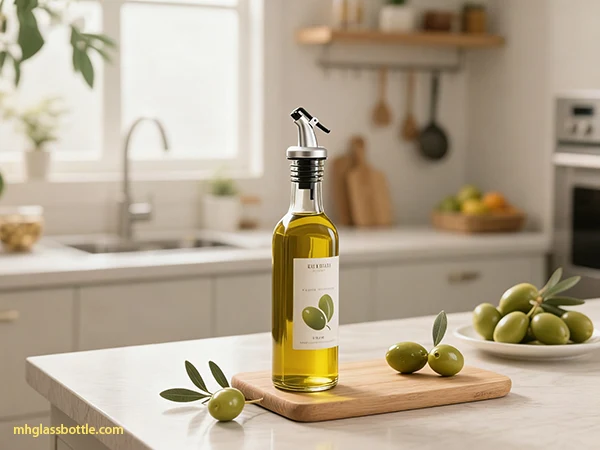
This report presents a comprehensive outline to achieve significant cost reduction and operating capacity through bulk purchase of olive oil glass containers. Packaging is one of the most sufficient cost factors for olive oil producers, not only a material expenditure, but also a major element of product presentation and brand identity. A consolidated, strategic wholesale purchase approach can unlock quite savings through shifting, from small-trunk to shifting, companies volume discounts, customized logistics and more supply chain stability. Businesses benefit from frequent dimensions, premium UV security, and advanced stability practices by partnering with special suppliers such as Minghang olive oil glass containers. These characteristics are important for maintaining both quality and compliance in competitive international olive oil markets.
The Objectives of Wholesale Purchase Strategy
The objective of this report is to underline container specifications, cost savings, supply chain optimization, inventory management, strategic sourcing, risk mitigation and a strong, data-powered purchase strategy covering financial estimates. Applying this structure will allow olive oil businesses to create long-term competition by ensuring both cost-effectiveness and unrelated quality. Additionally, Minghang Olive oil glass containers provide better clarity, a uniform wall thickness and customized branding opportunities that strengthen the premium position for high quality olive oil bottles.
Business Context and Container Specifications
Target Business Scale
This analysis targets medium-to-big-scale olive oil producers and distributors who work in both domestic and international markets. These businesses require a consistent and reliable supply of glass olive oil bottles to support large amounts of production runs, seasonal publicity and export contracts.
Estimated Annual Quantity
Depending on industry forecasts, an estimated annual requirement for olive oil glass containers is approximately 5,000,000 units. This level of demand makes the implementation of a dedicated wholesale purchase strategy strongly, which goes from distributor-based sourcing to direct manufacturer engagement.
Accurate Container Requirements
The selection of suitable glass bottles should balance aesthetics, structural integrity and cost ideas. Major specifications include:
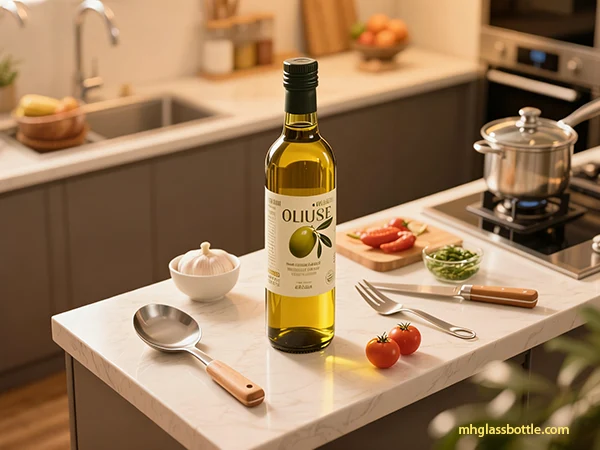
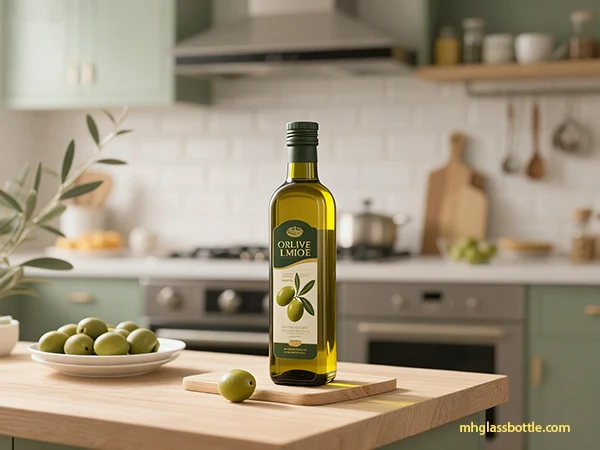
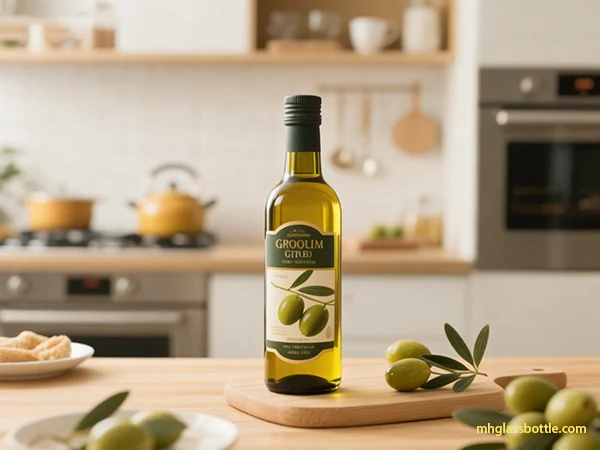
- Size and capacity: mainly 500ml (16.9 FL Oz), the most common and marketing size. Secondary requirements include 250ml and 750ml format for special lines.
- Size: Dorica or Marska Styles - Classic cylindrical bottles with a thin neck. Dorica is particularly favored for its elegant appearance.
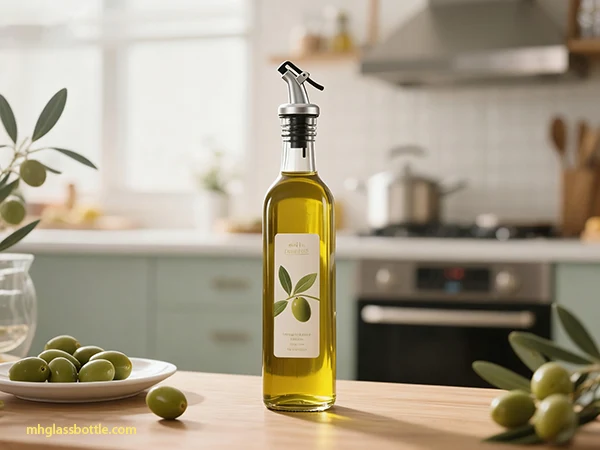
- Closure: ROPP screw cap with integrated paurar inserts (31.5 mm) to ensure product integrity and controlled dispensing.
- Color: Dark green or amber glass for UV security, required to prevent oxidation and preserve the quality of oil.
- Quality and materials: Food-grade, lead-free glass ISO 9001 built for standards. Bottles should have high clarity, similar wall thickness, minimal imperfections and strong durability during filling, capping and transport.
- Beauty and branding: smooth finish, coherent color, and surface treatment is suitable for premium labeling and embossing.
Sustainability Criteria
Stability in global procurement decisions is becoming a defined factor:
- Revision material: Preference for glass with at least 30% post-consumer recycled (PCR) content without compromising quality.
- Lightweight: Reduce glass weight to use raw materials while maintaining structural integrity and cut carbon emissions.
- Certificate: Prefer the suppliers with ISO 14001 and other recognized environmental management standards.
Cost Savings Analysis for Wholesale Purchase
The wholesale purchase of olive oil glass containers causes a decrease in average cost not only at per-unit price, but also by focusing on the total cost of ownership (TCO).
Volume Discount
Large integrated orders unlock direct volume-based discounts, optimize production efficiency and transmit fixed manufacturing costs:
- Current benchmark: 100,000 units per order $ 0.35 per 500 ml bottle.
- Bulk Benchmark: 5,000,000 annual units ordered a shipment of 1-2.5 million, which reduced the cost of 15–25%.
- Illustration: If the cost per-unit falls to $ 0.28, equal to savings ($ 0.35- $ 0.28) × 5,000,000 = $ 350,000 annually.
Shipping Frequency and Cost Low
Low, large shipment low per unit transport cost:
- FCL (full container load): more cost-skilled than LCL (less than container load).
- Content goods transportation rates: The preceding contract with large volume carriers justify.
- Administrative savings: To reduce paperwork for procurement orders, customs documentation and invoice.
Illustration:
- Current LCL shipping = $ 0.05 per bottle.
- FCL customized shipping = $ 0.025 per bottle.
- Annual Savings: $ 125,000.
Economies of Scale in Related Operations
Additional savings are felt in downstream operations:
- Low handling and warehousing costs.
- Better production scheduling and line usage.
- Low emergency order and rapid shipping fee.
Sourcing Strategy and Logistics Adaptation
Geographical Sourcing Strategy
A diverse sourcing portfolio reduces risk and remaining costs:
- Europe (Italy, Spain, Greece): Traditional olive oil hub ensures cultural fit and low lead time.
- Asia (China, Vietnam, Thailand): Competitive labor and energy costs, with installed glass manufacturing groups.
- Major factors: Raw material (silica sand) near ports, reaching energy-efficient furnaces and logistics infrastructure.
Transport Efficiency
Customized transport strategies increase cost benefits:
- Sea Freight: The most cost effective mode for wholesale shipment.
- FCL optimization: 40-foot high cube containers each contain 20,000-25,000 bottles.
- Consolidation Hub: Regional shipment requires small versions.
- Incoterms: Use FOB or CIF for cost control and risk clarity.
Delivery Scheduling and Lead Time
- Standard Sea Freight Lead Time: 4-8 weeks.
- Maintain buffer stock equal to 6-8 weeks of demand.
- Install Just-in-Case Inventory for unexpected delays.
- Apply direct-to -warehouse delivery to reduce handling.
Strategic Sourcing and Supplier Engagement
Identifying Potential Suppliers
Major criteria for selecting Global Glass Olive Oil Bottle Suppliers:
- Siddha track record in food and drink packaging.
- Strong technical expertise in UV protection and closed compatibility.
- Geographical variety to reduce risk.
Evaluation and Veterinary Suppliers
Evaluation dimensions include:
- Quality Standards: ISO 9001, FSSC 22000 Certificate.
- Pricing and TCO: Transparent pricing models including freight.
- Capacity: Ability to meet 5m+ unit demand.
- Reliability: Documents on time delivery.
- Stability: PCR Glass, ISO 14001 compliance.
- Accountability: Effective communication and technical support.
To Interact on Optimal Conditions
The best practices include:
- RFP issuing and operating a supplier audit.
- Signing the multi-year quantity contract to lock in pricing.
- Talking on favorable payment terms (30-60 days).
- To clarify tooling/mold ownership rights.
- At the time of delivery, defines slas for defect rates and dispute resolution.
Risk Mitigation and Quality Assurance
Potential Risk
- Quality anomalies in glass batches.
- Supply disruption due to lack of raw materials.
- Market or branding untouchability.
- Rift in currency exchange.
- Geo -political or logistics bottlenecks.
Mitigation Strategies
- Pre-check inspection and inbound quality check.
- Suppliers audit and periodic requirement.
- Dual sourcing to avoid single-competeral dependence.
- Buffer stock and casual plan.
- Comprehensive cargo insurance and clear customs documentation.
- Strong packaging solutions to reduce transit rupture.
Strategic Recommendations and Future Outlook
Transitioning to bulk purchasing of olive oil glass containers requires careful planning and phased implementation.
Actionable Recommendations
- Cross-functional team: Involve procurement, operations, finance, and QA from the outset.
- Demand forecasting: Invest in predictive analytics for more accurate volume planning.
- Container specifications: Finalize detailed technical and branding requirements.
- Supplier engagement: Conduct RFIs, RFQs, and structured audits.
- Warehouse & logistics: Expand storage and invest in handling equipment.
- Quality control protocols: Establish rigorous incoming inspection and KPI tracking.
- Long-term contracts: Secure 2–3 year supplier agreements to stabilize costs.
Implementation Roadmap
- Step 1 (month 1-3): Demand forecast, specification anatomization, warehouse audit.
- Step 2 (month 4-6): Suppliers Selection, RFQ, talks and contract signatures.
- Step 3 (month 7–9): Infrastructure upgrade, pilot order, staff training.
- Step 4 (month 10+): Full rollout, KPI surveillance, and continuous improvement.
Major Performance Indicators (KPI)
- Unit cost reduction.
- Inventory turnover rate.
- Timely distribution percentage.
- Suppliers defect rate.
- Warehouse use.
- Stockout frequency.
- Cash conversion cycle.
Future Approach
Giving further by 2026–2030, many trends will shape the purchase of olive oil bottles:
- Stability: Lightweight and recycled glass content.
- Digitalization: IOT for AI-operated demand forecast, blockchain-based supply chain transparency, and inventory tracking.
- Geophysical changes: Miscellaneous sources in many continents to reduce instability.
- Consumer priorities: growing demand for premium, environmentally friendly packaging.
- ESG compliance: Packaging waste and strong regulatory structure on carbon footprints.
By following this structured wholesale purchase structure, businesses can realize sufficient annual savings, strengthen the supply chain flexibility, and align with long -term stability objectives. Finally, strategic sourcing of glass olive oil bottles not only represents a cost-saving measure, but is an important promoter of brand competition and development of the global market.
Table of Contents
- The Objectives of Wholesale Purchase Strategy
- Business Context and Container Specifications
- Cost Savings Analysis for Wholesale Purchase
- Sourcing Strategy and Logistics Adaptation
- Strategic Sourcing and Supplier Engagement
- Risk Mitigation and Quality Assurance
- Strategic Recommendations and Future Outlook