EN
EN AR
AR BG
BG HR
HR CS
CS DA
DA NL
NL FI
FI FR
FR DE
DE EL
EL HI
HI IT
IT JA
JA KO
KO NO
NO PL
PL PT
PT RO
RO RU
RU ES
ES SV
SV TL
TL IW
IW ID
ID LV
LV LT
LT SR
SR SK
SK SL
SL UK
UK VI
VI HU
HU TH
TH TR
TR FA
FA GA
GA LA
LA MI
MI MN
MN

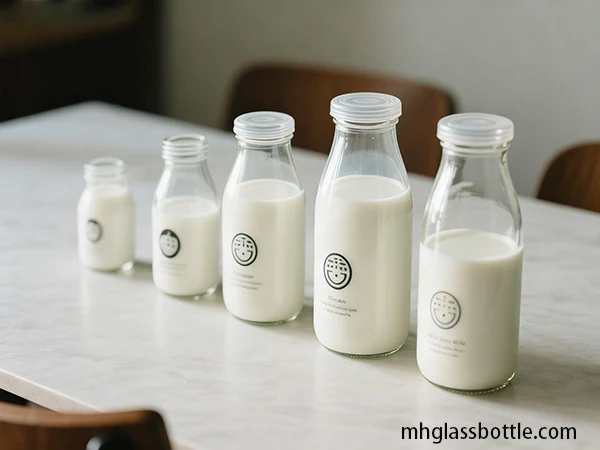
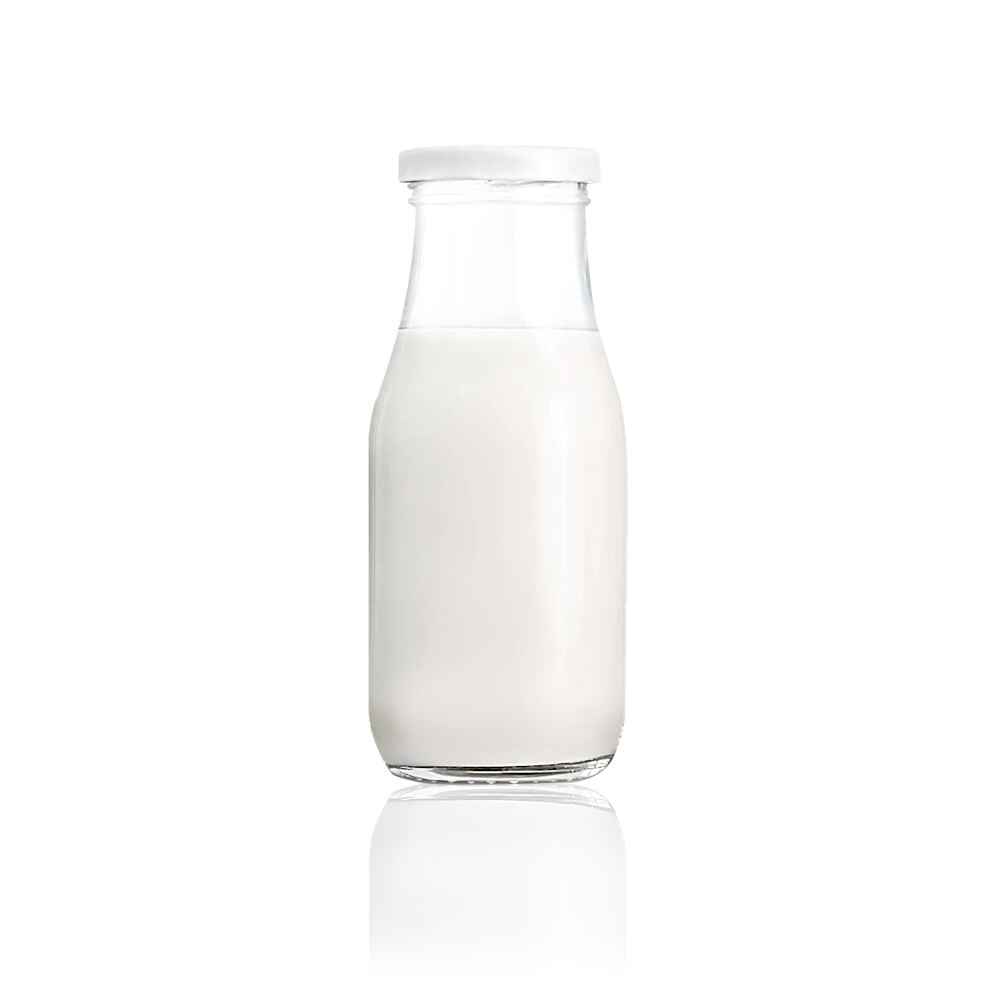
The pain points of shaving costs, regulatory demands for eco-friendliness, and consumer expectations for premium, green packaging are pushing the global milk bottle factory market into a serious re-thinking of its strategies. In this environment, glass milk bottles become the winning weapon of the brands that want to stand out through quality, visual appeal, and sustainability while HDPE and PET remain the materials of choice in the most volume and price-sensitive segments.
Market Segmentation & Material Preferences
By and large, the mass-market applications of high-density polyethylene (HDPE) and polyethylene terephthalate (PET) have accounted for most of the volume as these materials are cheap and simple to process. On the other hand, the glass milk bottle trend has been prevailing in the premium, organic, and plant-based dairy sectors. As a result of better taste retention, glass being chemically inert, and recyclability without any limitation, glass bottles become a significant differentiation factor for brands.
First-tier milk bottle manufacturers like Amcor and Berry Global are the front-runners in HDPE and PET production, benefiting from economies of scale, robust supply chains, and advanced R&D for lightweighting and recycled content. However, a factory with a more concentrated profile like Minghang might be the answer to a premium and sustainability brand's needs to obtain not only a glass milk bottle but one that is personalized in terms of shape, embossing, and made of high-purity flint glass. The point of having a milk bottle factory like Minghang as your partner is their holistic approach: they have the capability to design molds, shape glass, and decorate all in one place, therefore, being free from constraints in customization and delivery time.
Strategic Recommendations
- High-Volume, Cost-Focused Brands: Collaborate closely with Tier-1 HDPE/PET milk bottle factory to concentrate on the total cost of ownership (TCO) and logistics improvement.
- Premium & Sustainable Brands: Collaborate with top-notch glass provider to avail fully customized and revolutionary glass milk bottles that not only promote brand equity but also contribute to sustainability objectives.
- Market Agility & New Product Launches: One of the primary moves to enhance brand agility and innovation in new product launches is to employ a hybrid sourcing strategy. This strategy would allow the brand to buy stock glass milk bottles from distributors and at the same time facilitate the custom design of proprietary molds. In this case, cost, speed-to-market, and long-term brand differentiation are balanced.
Evaluation Framework & Sourcing Methodology
The choice of the best milk bottle factory should rely on a significant, multi-layered evaluation framework. Brands should not continue with the old practice of counting only unit costs, instead, they have to consider total value, risk, and long-term strategic fit as well. Through a deep assessment of milk bottle factory, brands can achieve alignment with their operational demands, sustainability targets, and market positioning.
Cost Competitiveness & Total Cost of Ownership
Determining the total cost of ownership (TCO) is just as significant as per-unit pricing when looking for a milk bottle factory. The major elements are:
- Unit Price Across Volume Tiers: It is fundamental to have a good understanding of how economies of scale work for both glass milk bottles and plastic alternatives. Some milk bottle factories will offer you a sizable discount if you place a large volume order, while others will give you more flexibility for smaller runs.
- Tooling & Mold Costs: The process of tailoring the molds of glass bottles is an operation that requires a substantial amount of money upfront and thus, significantly affects the total cost of ownership (TCO). A plant having the facility for designing molds in-house will not only reduce the lead time but also minimize the production risk.
- Logistics & Freight Costs: In comparison to plastic, glass is a heavier material and is also more delicate. Therefore, if you are buying from a milk bottle factory, it is necessary to not only check the vehicle closely but also the ways of lessening the risk.
- Lifecycle Costs: The brand should think about what kind of rules they will have to follow. These rules will include recycling fees, extended producer responsibility (EPR) charges, and product recalls. One of the signs of a reliable milk bottle factory is being honest about these lifecycle costs.
Sustainability & Circular Economy
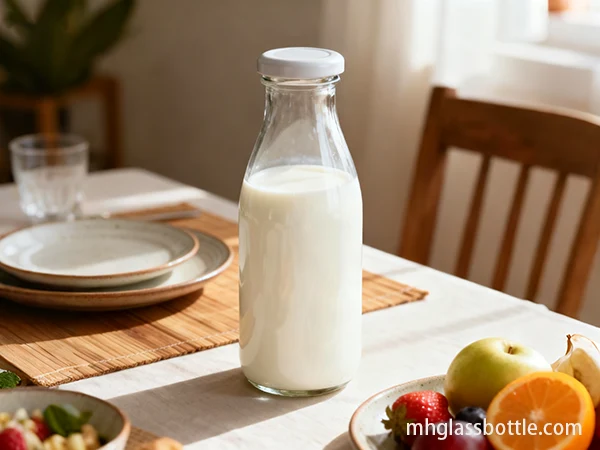
Environmentally friendly is no longer just a buzzword or a claim in the marketing but rather a necessary consideration. Contemporary brands cannot exist without making a sustainable choice when picking a milk bottle factory:
- Recycled Content Verification: The best milk bottle factory can issue a certificate that confirms the use of post-consumer recycled glass (cullet) in the case of glass milk bottles or rPET/rHDPE if it is a plastic alternative. Proper tracing is the only way to be sure that the regulations are being followed.
- Recyclability by Design: The label adhesives, the closure system, and most importantly the material you have chosen for your glass bottle will determine its recyclability. Brands from factories that recycle get the trust of their customers more easily.
- Lightweighting & Energy Efficiency: Some technologies used in the forming of the milk bottles are very progressive, therefore the milk bottle factories are now able to lower the amount of material for one unit whilst maintaining the strength and functionality of the product. This is very energy-friendly for the production stage and the transport emissions are greatly reduced.
Market Landscape: Global Milk Bottle Factory Ecosystem
To get a good grasp of the global milk bottle factory ecosystem we need to look at material preferences, the advantages of a certain location, and the technical capabilities. All these factors will decide which partner is the most suitable for your brand.
Segmentation by Material
HDPE & PET
While HDPE is still a popular choice of material in markets with heavy consumption, high volume use and good recycling practices, due to its affordability and robustness, PET is characterized by purity and strength and is preferred in premium and single-dose segments. Some significant points for milk bottle factories to consider are:
- HDPE Advantages: Non-breaking ability, UV resistance, well-established recycling streams.
- PET Advantages: Very high clarity, extremely light, the use of 100% rPET is becoming more common.
- Difficulties: PET and HDPE come from fossil fuels; recycled content for both is subject to gradually increasing mandates.
Glass Milk Bottles
Non-returnable glass milk bottles have been praised more and more for their ability to serve the most demanding market segments of the dairy industry. Some of the advantages provided by the specialized glass milk bottle factories are:
- Purity & Flavor Preservation: Glass is the most compatible and plastic-free material, therefore is very safe and gives the best flavor retention.
- Luxury Branding: Different curves, embossing, and colors with the help of which the consumer decorates the product even without buying it.
- Sustainability: Unlimited recyclability, usage of high cullet content, and power coming from renewable sources.
- Technical Precision: Top-tier milk bottle factory has capabilities for not only even distribution of glass walls but also for extremely accurate neck finishing and the production of containers that have been thoroughly tested for resistance to various types of stress, hence no breakage.
Tier-1 vs. Niche Milk Bottle Factories
Global milk bottle production plants are basically of two types i.e. large-scale Tier-1 factories and niche specialized producers. Understanding their potential is a good way of finding out which one fits better a brand strategy.
Tier-1 Leaders
Milk bottle factories of Tier-1 level such as Amcor and Berry Global are characterized by their huge scale and high efficiency:
- Mass Production Expertise: The production is done in a very high volume and is always efficient and dependable.
- Technological Leadership: By advanced rPET and HDPE processing, lightweighting, and using of barrier layers for longer shelf life.
- Global Footprint: As a result of the different production plants in different parts of the world, be it Asia, America, or Europe, the delivery of goods is not only very quick but the freight costs are also very low.
- Strategic Fit: Tier-1 manufacturers are the ones from which standardism and operational efficiency may be expected by those brands that make use of their services.
Specialist Glass Milk Bottle Factory
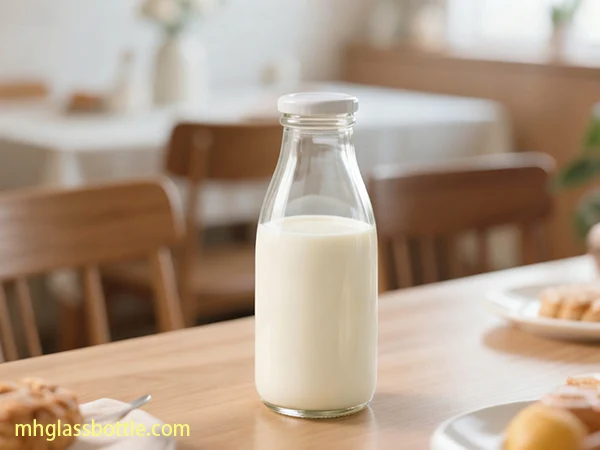
- Customization Capabilities: Certain operations of them can be their own molds, they can emboss or deboss, have colored or transparent glass milk bottles, control the wall thickness, and even make products in peculiar shapes.
- Sustainability Focus: The greatest part of the post-consumer recycled glass is the one that is coming from the consumer side of the country, the furnaces are fitted with energy-efficient technology, and the production methods are carbon-free.
- Quality Assurance: Consequently, the main reasons for these experiments are to identify the absence of defects in the glass: thermal shock, impact resistance, and the seal tightness of the closure.
- Service & Flexibility: Lower MOQs, collaborative prototyping, and phased production for emerging brands.
By associating with a reliable milk bottle factory such as Minghang, brands get the opportunity to separate themselves from the crowd not only because of the luxurious nature of their glass bottles but also because of the fact that they are environmentally friendly. Minghang has the capability to perform the design, forming, decorating, and logistics stages which thus makes the journey from idea to shelf-ready glass milk bottles a lot easier.
Sourcing Model Options: Stock, Custom & Hybrid
The decision on which sourcing model to go for plays a very important role in the optimization of cost, lead time, and brand identity.
Stock Bottles
- Pros: Immediate availability, minimal tooling investment, low MOQs.
- Cons: Limited differentiation; competitors can use the same glass milk bottles.
Custom Molds
- Pros: Full control over shape, embossing, wall thickness, closure interface, and glass bottle aesthetics.
- Cons: High upfront cost and longer lead times; large MOQs required to amortize tooling investment.
Hybrid Model
- It stock bottles are combined with custom closures, caps, or decoration.
- This way a brand can still keep its unique character without the need for a big initial investment.
- Also, it is a great way to plan a gradual step from quick market penetration to exclusive glass milk bottles.
Quality Control, Compliance & Regulatory Considerations
Guarding the quality of milk in glass has to be done through various QC methods that involve dimensional checks, thermal shock testing, and closure verification.
Testing & Inspection
- Dimensional Accuracy: The automated measurement system gauges the bottle parts i.e. height, diameter, and wall thickness as well as neck finish.
- Thermal Shock & Impact Resistance: The method used here imitates the hot-filling of a container and handling of the same in order to test the resistance of the product to such activities.
- Closure Integrity: Through torque testing and vacuum checks, leak-proof performance will be detected and ensured if present.
- Cosmetic Inspection: Visual defects like seeds, blisters or cords that could be present in the product are identified and removed from the final product.
Regulatory Compliance
- Food-Grade Standards: The necessary certification is obtained from the FDA in the U.S. and EFSA in the EU.
- ISO Certifications: The requirements of ISO 9001, FSSC 22000 and GMP are complied with.
- Heavy Metal Testing: This is to make sure the glass milk bottles that are made with colorants or decorated are safe to be in contact with food.
- Documentation: The milk bottle factory issues Certificates of Compliance (CoC) or Declarations of Conformity (DoC).
Future Trajectories: Technology, Regulation & Consumer Trends
Emerging Technologies
- Smart Packaging: Traceability and engagement made easy through the use of QR codes and NFC integration.
- Advanced Lightweighting: Designs optimized through CAD/FEA help in reducing the use of glass without compromising on strength.
- Active & Intelligent Packaging: The packaging is equipped with oxygen-scavenging layers and antimicrobial coatings, thus prolonging the shelf life.
Regulatory Denunciations & Consumer Movements
- EPR & Recycled Content Mandates: Governments provide incentives for glass milk bottles made from recycled material.
- Refill & Reuse Programs: Local dairies are actively participating in the comeback of glass milk bottles that can be returned to them.
- E-Commerce Optimization: The improvement of packaging designs makes it possible to lessen the incidences of breakage during shipping.
Table of Contents
- Market Segmentation & Material Preferences
- Evaluation Framework & Sourcing Methodology
- Market Landscape: Global Milk Bottle Factory Ecosystem
- Tier-1 vs. Niche Milk Bottle Factories
- Sourcing Model Options: Stock, Custom & Hybrid
- Quality Control, Compliance & Regulatory Considerations
- Future Trajectories: Technology, Regulation & Consumer Trends
- Regulatory Denunciations & Consumer Movements