EN
EN AR
AR BG
BG HR
HR CS
CS DA
DA NL
NL FI
FI FR
FR DE
DE EL
EL HI
HI IT
IT JA
JA KO
KO NO
NO PL
PL PT
PT RO
RO RU
RU ES
ES SV
SV TL
TL IW
IW ID
ID LV
LV LT
LT SR
SR SK
SK SL
SL UK
UK VI
VI HU
HU TH
TH TR
TR FA
FA GA
GA LA
LA MI
MI MN
MN

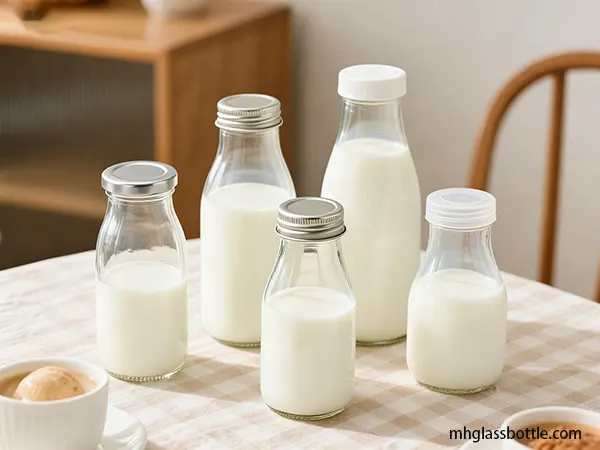
This report presents an in-depth examination of cost-cutting possibilities in the milk bottle wholesale purchasing of the company and the entire supply chain of glass milk bottles. The report highlights the important optimization areas that span from procurement strategies, material and design specifications, to logistics and inventory management. Moreover, the report features strategic proposals to create value from order volumes, supplier relationship management, using innovative materials and operational efficiencies. The purpose is to facilitate businesses in the milk bottle wholesale industry to make a remarkable reduction of their costs while still ensuring product quality, compliance with regulations and sustainability in the long run.
Current Operational Baseline
Knowing the sanitary landscape of bulk milk bottle procurement is a must if one is to pinpoint specific areas where costs can be cut and inefficiencies corrected.
Existing Procurement Context
The main point of our procurement strategy is to ensure a continual supply of top-quality glass bottles that would satisfy production needs. We manage the relationships through yearly contracts with a handful of suppliers which, on the one hand, gives us stability and, on the other, imposes limitations.
- Order Volumes: The yearly purchase of one-liter glass milk bottles is usually around 50 million units. The demand increases up to 5 million units per month during the high season.
- Material Specifications: In most cases, soda-lime glass is used for the bottles. It is preferred for its durability, recyclability, and premium look. PET bottles are used only for lines that are lightweight or non-breakable.
- Logistics Framework: The time from dispatch to arrival at the central facilities varies from 4 to 8 weeks.
- Inventory Practices: The reordering system is at the point where the company always has 4–6 weeks of the safety stock, which allows for operational continuity but doubles the storage costs.
- Regulatory Compliance: It is mandatory for every bottle to comply with FDA and EU food-contact regulations and recycling and waste directives should be observed in the use of these bottles.
Current Cost Structure Overview
The total cost of ownership in milk bottle wholesale extends beyond unit price to include:
- Direct Material Costs (raw materials and energy)
- Freight and Logistics Costs
- Warehousing and Handling Costs
- Quality Control and Defect Management
- Environmental Compliance and Waste Management
- Understanding these cost drivers enables targeted and measurable cost reduction strategies.
Procurement and Supplier Relationship Optimization
Enhancing procurement and supplier management is the leading cost-saving measure by far within the glass milk bottle wholesale market.
Strategic Sourcing and Volume Aggregation
The number of wholesale orders for milk bottles is extremely large, therefore, a buyer is in a very strong position to negotiate. The benefit is even more significant when the purchases are centralized across the different product categories.
- Consolidated Purchasing: One achieves maximum purchasing power by combining the orders for all kinds of bottles (glass, PET, different sizes).
- Long-Term Contracts: Such agreements with the commitment of at least a certain volume for several years lower the unit costs and also make production more stable.
- Tiered Pricing Models: The supplier is encouraged by the proposal of lower prices at higher volume levels.
- Supplier Consolidation: The decrease in the number of suppliers makes it easier to negotiate with the remaining suppliers while also ensuring the company's trustworthiness.
Enhancing Supplier Relationship Management
Good and transparent relationships with suppliers will bring a lot of value over time in shared costs, innovation, and efficiency aspects.
- Preferred Supplier Programs: Support stable suppliers and, thus, give them demand visibility and the opportunity for co-innovation.
- Joint Cost Reduction Initiatives: Collaborate in changing packing, lessening the weight of the bottle, and making the production process more efficient.
- Performance-Based Contracts: Bonus payments are connected to KPIs such as timely delivery, low defect rates, and high flexibility.
- Open Book Costing: The sharing of openly available costs creates a good atmosphere and cooperation in cost control for joint optimization.
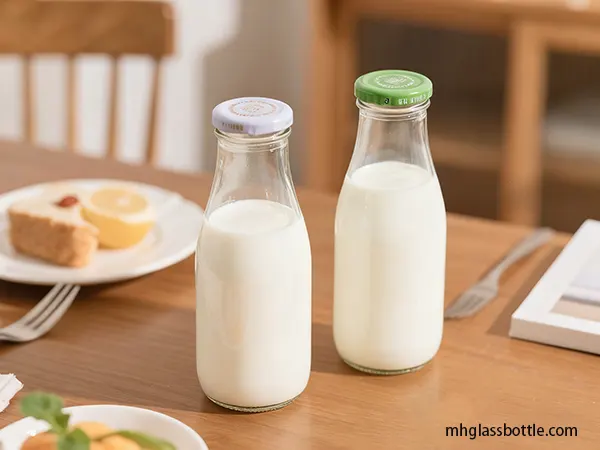
Advantages of Partnering with Minghang
Working with a milk bottle wholesale supplier of good repute like Minghang could be very instrumental in you meeting your cost and quality objectives, and accomplishing the related goals:
- Economies of Scale: The huge volume of production leads to a cheap unit of glass.
- Top-Notch Manufacturing: The main factors for very few defective items are precision, clarity, and durability.
- Customizing the Brand: Through the use of light-weighted or branded glass milk bottles, the brand can be made visible without the glass losing its consistency.
- Sustainable Production: The use of recycled cullet and energy-efficient processes are two major factors that help achieve environmental goals.
- Reliable Supply Chain: The less downtime there is, the better it is for the company and this can be attained through stable production and delivery schedules.
Thus, leveraging such partnerships, companies would be in a position to guarantee steady, green, and cost-effective access to glass milk bottles for their wholesale requirements.
Material, Design, and Closure Specification Review
Going deep into the analysis of the bottle's material and design offers the chance to make the structure lighter and at the same time keep the product safe and visually attractive.
Alternative Materials for Milk Bottle Wholesale
While glass is still regarded as the best material, there are some substitutes that can be utilized to gradually lower the production cost:
- Lightweight Glass: By thinning the glass walls both material and shipping costs are reduced by 5–10%.
- High Recycled Content: Utilizing 60–80% recycled glass (cullet) not only saves the raw material but also lowers energy consumption.
- PET Alternatives: The use of PET is good for non-premium or export channels and it results in the lightening of the transportation and decreasing the risk of breakage.
- Next Generation Materials: One of the potential next steps for milk bottle wholesale sustainability could be bioplastics or completely compostable materials after finishing intensive research.
Optimizing Bottle Designs
- SKU Standardization: The fewer the bottle shapes, the simpler the procurement and production become.
- Ergonomic Efficiency: Designs that increase pallet density and line speed cause a drop of operational costs.
- Labeling & Finish Standardization: Employing the same neck finish for all is a step ahead in solving the problem of closure complexity and interchangeability.
Closure and Cap Optimization
- Material Substitution: The cost is lowered by one unit if HDPE screw caps or lightweight aluminum are used instead of a more expensive material.
- Standard Cap Dimensions: The use of fewer cap types leads to the enhancement of efficiency and stock reduction.
- Cap Weight Reduction: The 1g less per cap may not sound like a lot but if you consider the millions of bottles the savings can be quite significant.
There are just a handful of the cumulative changes that slowly but surely enhance the competitiveness of a glass milk bottle wholesale business.
Logistics and Inventory Management Efficiency
Streamlining logistics and inventory in milk bottle wholesale improves both cost and responsiveness.
Inbound Logistics Optimization
Route Optimization & Backhauling:
- Optimization of routes through planning in a very efficient manner usually calls for savings in the freight budgets.
- Full Truckload (FTL) Utilization: Use FTL to the maximum extent of your means so as to be able to spread transportation costs over a larger number of units thus decreasing the cost per unit.
- Regional Sourcing: By using glass bottle suppliers that are closer to your bottling plants you ensure not only that transit times will be shorter, but also that your carbon footprint will be reduced.
- Pallet Efficiency: Work together on the configurations so that you could have maximum truck space utilization.
Smart Inventory Management
- Just-in-Time (JIT): You can significantly reduce the volume in your warehouses if you manage to synchronize deliveries with production schedules.
- Vendor-Managed Inventory (VMI): Let suppliers take charge of replenishing stock based on the consumption data that is provided in real-time.
- Consignment Models: Paying only for the bottles that you have actually used is one of the main benefits of this model that leads to a reduction in the working capital.
- Warehouse Automation: Using machines for tasks that require speed and are of low cost will bring a lot of advantages to the company.
Milk bottle wholesale innovations discussed above are designed to reduce operational expenses through the entire distribution network in milk bottle wholesale.
Strategic Implementation and Continuous Improvement
One of the essential prerequisites to an optimized milk bottle wholesale model is the establishment of a firmly structured road map to effectively cope with the changes.
Phased Implementation Plan
- Phase 1 (0–6 months): Perform detailed cost analysis, locate quick wins, and initiate supplier negotiations.
- Phase 2 (6–18 months): Start design optimization workshops and put VMI/JIT systems in place.
- Phase 3 (18+ months): Develop monitoring tools and continuous innovation schemes.
Technology Integration
- AI Forecasting: help with that by explaining their role in demand prediction Freshness and accurate prediction of demand fluctuations are vital for efficient production scheduling.
- Blockchain Traceability: Widely used in different areas, It is also implementable in glass milk bottle wholesale supply chains to enhance transparency.
- IoT Monitoring: The use of sensor technology can help in shipping and warehousing for more accurate inventory management.
- Automation: Maintain use of robots in logistics and packaging to assure quality and lessen the need of labor hours.
Long-Term Innovation and Sustainability in Milk Bottle Wholesale
Continuing innovation and effective sustainability measures are what mainly fuel the ability to stay competitive and maintain a leading position in the market of milk bottle wholesale. Those companies which not only innovate their operations, materials, and the overall design but also do so at lower cost levels, will simultaneously create more brand, customer and environmental value.
Continuous Improvement Framework
- Cross-Functional Cost Committees: The creation of committees comprising the Research & Development, production, and procurement staff allows these units to closely follow efficiency gains, to better manage production costs and to speed up operations in the milk bottle wholesale business.
- Benchmarking: By frequently measuring performance of suppliers and internal works against norms/standards of the industry, a company ensures that it follows best practices, closes gaps, and regularly provides high-quality milk bottles.
- Supplier Innovation Challenges: Attempts in suppliers to provide feasible, eco-friendly, and cost-reducing ideas to the company build a partnership-friendly atmosphere where, consequently, material sourcing and packaging design jointly become areas of sustainable growth. Introducing strategies through lightweighting, alternative materials, or process optimization that lead straight to the efficiency of milk bottle wholesale distribution can be welcomed by suppliers as a great opportunity.
Circular Economy Integration
- Closed-Loop Recycling Systems: The utilization of closed-loop methods for glass milk bottles is a way to allow for collection, washing, and eventual reusing of the same containers which is obviously accompanied by less reliance on new raw materials and results in a smaller carbon footprint.
- Sustainable Materials: Using recycled glass (rGlass), biodegradable plastics for caps made of polyhydroxyalkanoates (PHAs) or polylactide (PLA), and eco-friendly labels made from 100% post-consumer recycled paper or cellulose-based materials are ways that support long-term sustainability targets and have a positive effect on the industry of retailing and consuming.
- Improved Brand Reputation: Leading the transition to the circular economy not only gives the player in the milk bottle market leverage over their operational costs but also, boosts their reputation to be one of the most environmentally responsible and, hence, they become the first choice for premium buyers, as well as gaining their loyalty over the long term.
- Innovation-Driven Sustainability: Packaging innovation through various factors such as the use of new materials, change in the shape of the bottle, type of the closure, and distribution logistics is one of the ways in which milk bottle wholesale pools can stay not only efficient but also easily adaptable to the emerging environmental standards.
Thus, the tandem of continuous improvement initiatives and circular economy principles can help milk bottle wholesale businesses to achieve the goals of cost efficiency, sustainability, and long-term market leadership which in turn makes them the desired partners of dairy producers all over the world.
Strategic Recommendations and Future Outlook
The glass milk bottle wholesale sector is very competitive. To maintain this, businesses need to balance efficiency, flexibility, and innovation.
Key Recommendations
- One of the best ways to make use of the bulk negotiation power is to centralize the procurement of milk bottle wholesale.
- To decrease the risk of price fluctuations suppliers' long-term partnerships should be prioritized.
- It is a good idea to incorporate AI-based forecasting into your business planning and combine it with real-time logistics.
- By standardizing bottle and closure designs, companies will be able to simplify their operations.
- Put your money into projects that promote the environment such as thin glass and high cullet content rather than into other things.
Future Outlook
The overall milk bottle business at the wholesale level will follow the trend of smart automation, environmentally friendly production, and supplier partnership. Besides cutting costs in the long run, local and international milk bottle companies will also be able to reduce their carbon footprint and retain their market share by embracing digitalization, adopting eco-friendly design principles, and implementing robust logistics models.
Table of Contents
- Current Operational Baseline
- Procurement and Supplier Relationship Optimization
- Material, Design, and Closure Specification Review
- Logistics and Inventory Management Efficiency
- Strategic Implementation and Continuous Improvement
- Long-Term Innovation and Sustainability in Milk Bottle Wholesale
- Strategic Recommendations and Future Outlook
 ONLINE