EN
 AR
 BG
 HR
 CS
 DA
 NL
 FI
 FR
 DE
 EL
 HI
 IT
 JA
 KO
 NO
 PL
 PT
 RO
 RU
 ES
 SV
 TL
 IW
 ID
 LV
 LT
 SR
 SK
 SL
 UK
 VI
 HU
 TH
 TR
 FA
 GA
 LA
 MI
 MN


Table of Contents
- What should buyers look for in glass milk bottle manufacturers?
- Manufacturer vs. Glass milk bottle suppliers
- Wholesale Glass Milk Bottles: The Specifications That Affect Cost
- Food-Contact Compliance: What Documentation Should Suppliers Provide?
- How to Choose a Glass Milk Bottle Supplier: A Practical Evaluation Method
- Questions to Ask Before Placing a Bulk Order
- Frequently Asked Questions About Glass Milk Bottle Suppliers
- Determine a glass milk bottle provider that is able to match your enterprise
Some glass milk bottle suppliers disappoint. Sometimes the same buyer of the glass packaging gets the same quote for glass milk bottles in a carton, but forgets to consider the mold charges, closure compatibility, breakage rate, production tolerances, and the costs of heavy glass being transported at a long distance. When these factors are added in, a low price supplier may turn out to be a high cost option. So, what makes a reliable glass milk bottle supplier stand out from the pack that gives you an appealing quotation?
It depends on what you plan on doing with the bottles. A standardized container for a dairy processing firm is not the same as a unique embossed container bearing a logo or distinctive bottle shape to a private-label beverage company. Distributors, on the other hand, might prefer repeat availability, manageable minimum order quantities (MOQs), and an even product line.
We believe that it is time to choose suppliers based on demonstrated manufacturing capabilities, product specifications, food contact compliance and total landed cost, rather than on marketing claims.
What should buyers look for in glass milk bottle manufacturers?
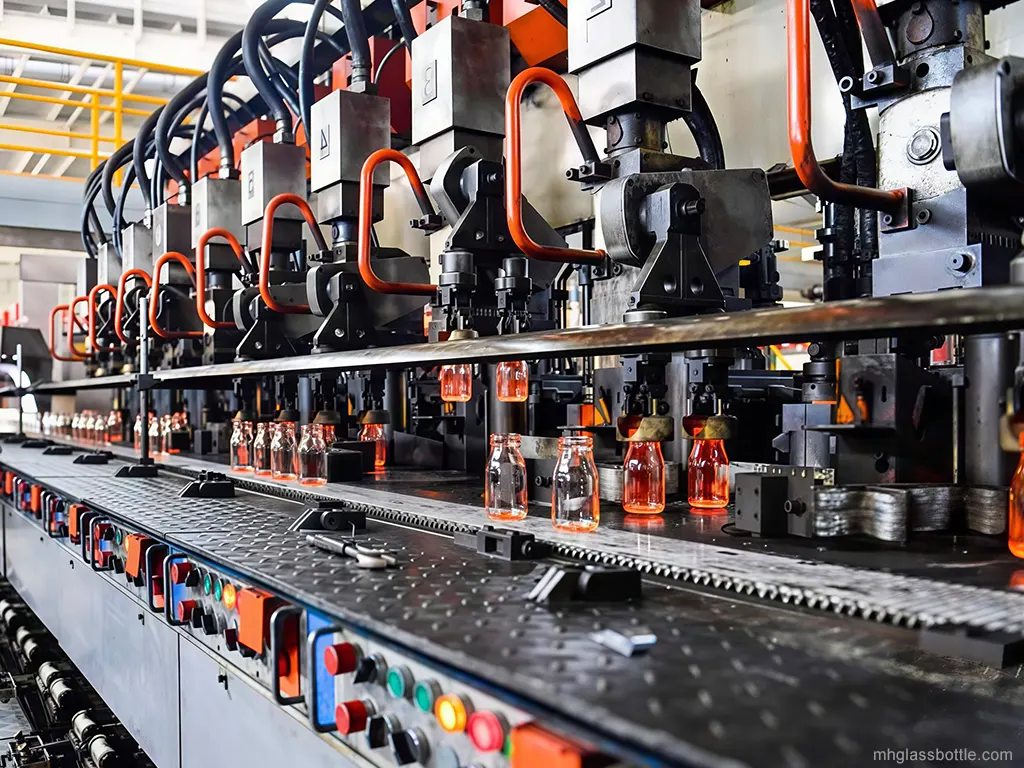
A manufacturer should be able to describe how their manufacturing process meets your product specifications. The five areas which we would begin with are bottle design, glass wall thickness, glass weight, neck finish, and closure compatibility, as well as the consistency of production.
Nothing can be determined from a photograph as to whether a bottle will be suitable for use with a filling line. Nor does a supplier's statement that he has a factory imply that he has a control in the forming, inspection and packing processes.
If you're one of the few who has reduced glass milk bottle manufacturers list to a few, you must request them for the following:
- Production capability – is the supplier a production line for the bottle or does he get the bottle from another production line?
- Dimensional specifications: Is it able to provide drawings that contain dimensions such as capacity, overall height, max diameter, neck finish and dimensional tolerances?
- Next order consistency: Does the next production batch match approved sample with respect to dimension, weight, colour and finish?
- Quality inspection: What are the tests done for cracks, chips, bubbles, surface defects and critical dimensions?
- Export experience: Does the supplier have experience in packing bottles for your destination and shipping?
Prior to ordering a large quantity, we would also want to order a sample of the product. This could be easy for an existing stock bottle. If it is a new mould the approval should be accompanied with the actual bottle design and the proposed closure.
Manufacturer vs. Glass milk bottle suppliers
The difference is important because it will impact pricing, customization, communication, and accountability.
| Evaluation factor | Direct glass bottle manufacturer | Packaging wholesaler or trading company |
|---|---|---|
| Product customization | May support custom molds, embossing, and design changes | Depends on factory partners |
| Stock availability | Depends on production schedule and inventory | May consolidate stock from several sources |
| Order quantities | Varies by bottle design and production run | May offer smaller mixed orders |
| Technical communication | Direct access may be available to production staff | Usually coordinated through a sales team |
| Quality control | Can control production processes if genuinely manufactured in-house | Depends on supplier qualification and factory oversight |
| Pricing structure | May offer direct factory pricing, subject to MOQ and logistics | May charge for sourcing, inventory, and coordination |
| Best fit | Repeat orders, custom designs, and planned production volumes | Trial orders, mixed product ranges, or smaller purchasing needs |
Our take: It's not always a cheaper option to buy direct. A factory may be able to give a lower ex-work price as they order more or a wholesaler may give a lower first ex-work price plus a consolidated shipment. Be sure to pay close attention to the same specification, quantity, delivery terms and the same packaging standard before making a decision.
Wholesale Glass Milk Bottles: The Specifications That Affect Cost
If the bottle is not compatible with the cap, filling machines, storage system and retail packaging, a low unit price is worthless.
We recommend customers ask for a specification sheet when ordering wholesale glass milk bottles, this should include the following:
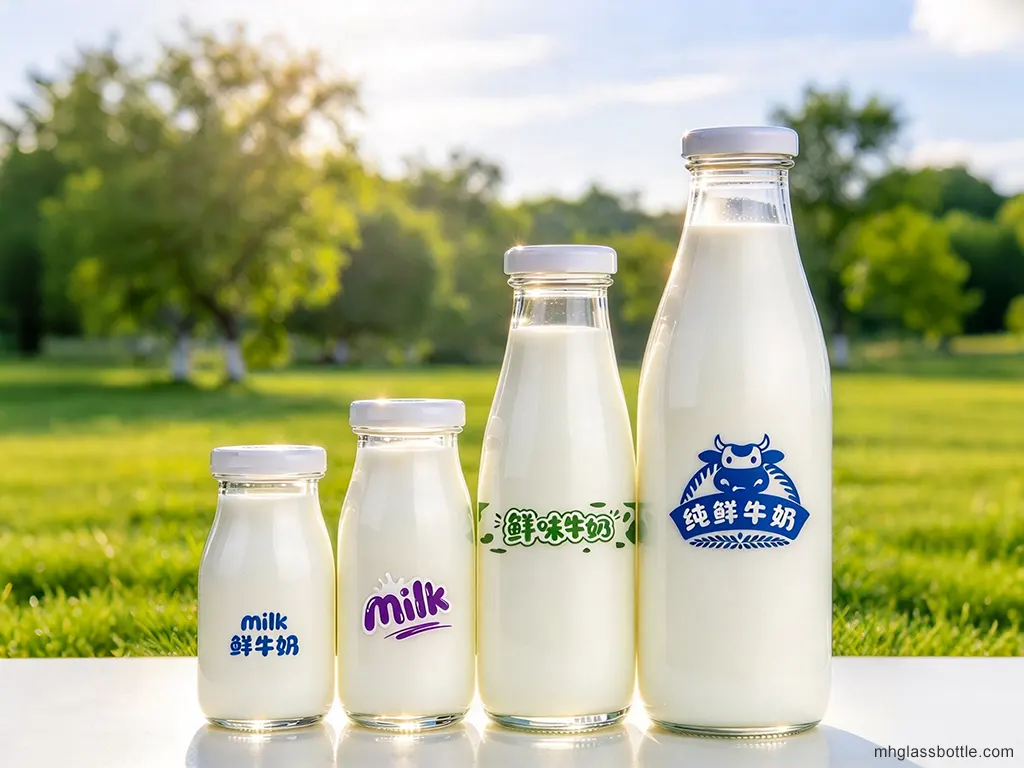
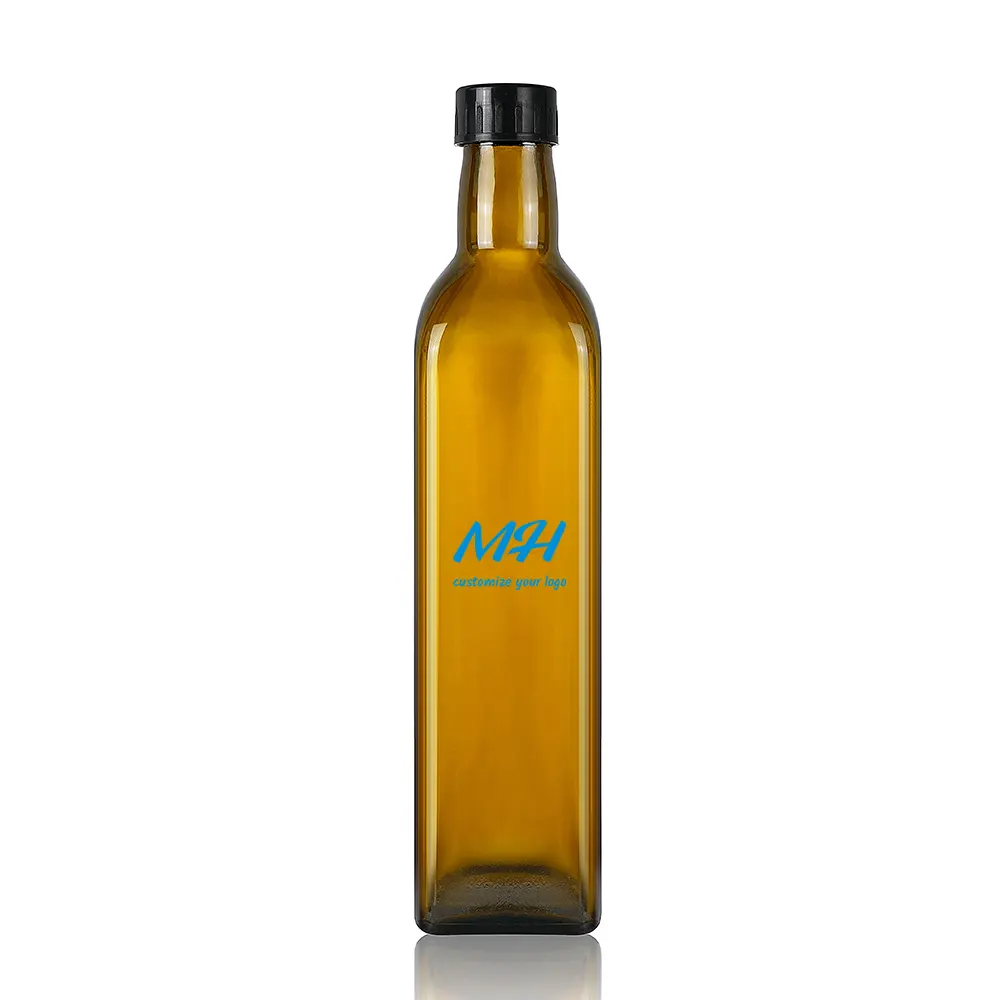
- Nominal capacity: The standard sizes offered in the market will be either 250 ml, 500 ml or 1 litre, which can vary from one supplier to another.
- Glass weight: The larger and heavier bottles can add more weight while shipping and makes handling more difficult.
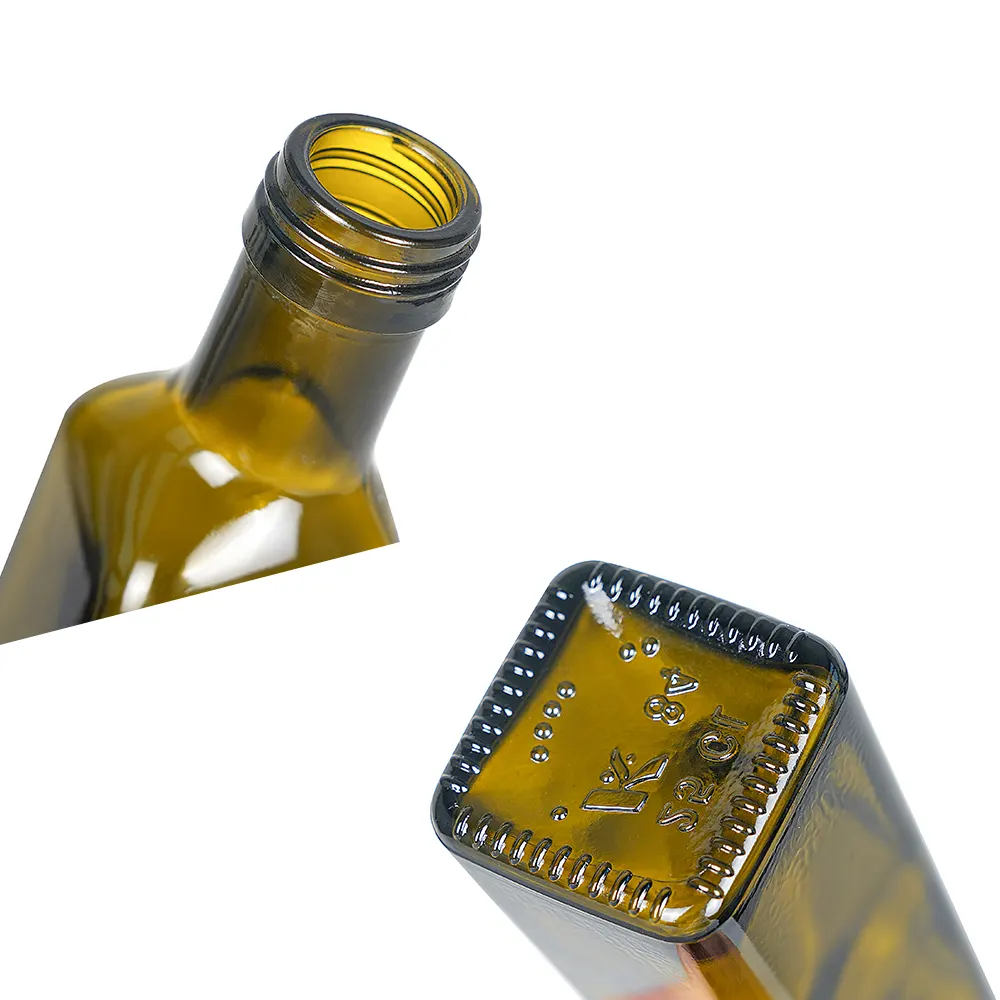
- Neck finish: The finish on the neck should match the cap/closure specified.
- The effect of diameter, height, base size, shoulder profile on filling, labelling, packing and storage of bottles.
- Glass colour: is usually clear flint glass, other colours are related to the product design and manufacturing capability.
- Closure and seal: Ensure that the cap material, the liner or seal and its compatibility with the desired dairy product and processing technique.
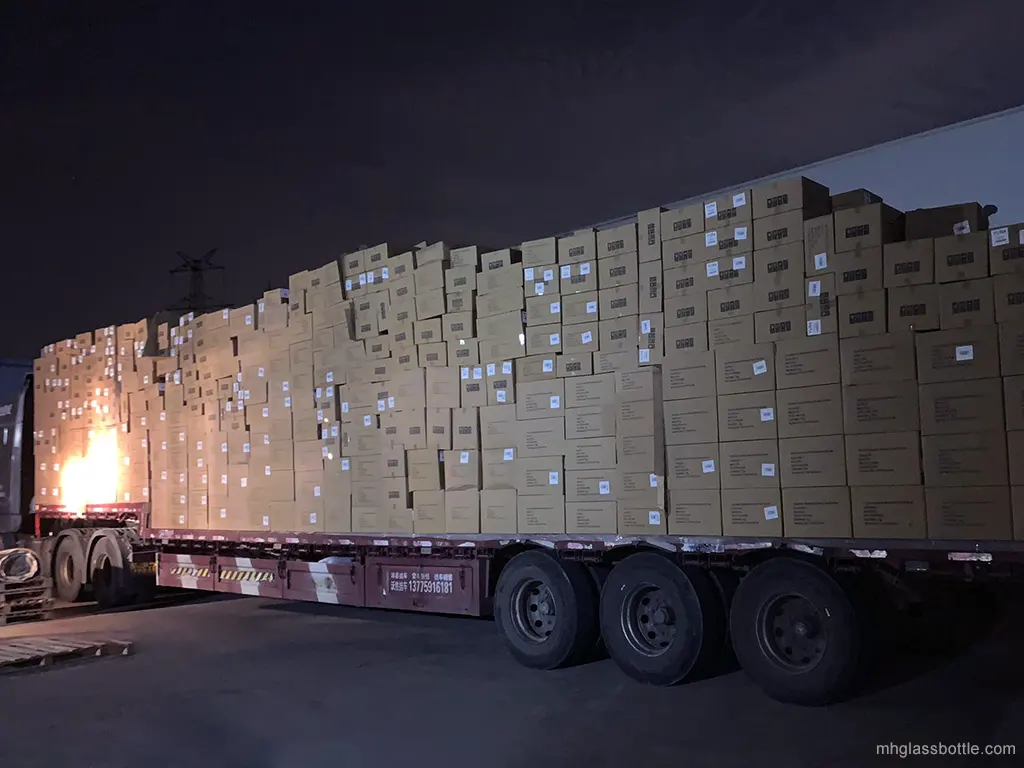
- Packing method: The use of protective materials, partitions, pallets, cartons and dividers will affect the effect of breakage and freight costs.
Always don't take for granted that two 500ml bottles are the same. There are many different shapes, sizes, quality and locking mechanisms.
The criteria used for assessing sustainability claims
Glass recyclable packaging is recyclable, but does not always have a low impact in all distribution models. This is made more complex by the difficulty of shipment, distance of shipment, the percentage of recycled content, the collection systems, and reusing the bottle.
The following figures help to make the above statements more relevant. In September 2025, the California 2024 Minimum Content Report on Glass Containers was released and statewide glass containers averaged 45.41% recycled content in 2024. A state-wide value only and not a bottle to bottle guarantee.
The US Environmental Protection Agency (EPA) 2024 estimation of recycling infrastructure needs to recycle an additional 38 – 45 million tons of packaging waste, requiring estimated infrastructure investment to be $22 - 28 billion. These numbers refer to a range of packaging materials, not only glass.
In procurement, we would request suppliers to specify which claims are made as recycled content, recyclability or actual re-use programs. These are three separate entities.
Food-Contact Compliance: What Documentation Should Suppliers Provide?
Burden of proof for suitability for food contact shall not rely on the word “glass,” but rather on the full package system. The bottle, closure, coatings and any other parts that come into contact with the milk must be suitable for their purpose.
The FDA guidance "Determination of the regulatory status of food-contact materials" outlines how the regulatory status of a food-contact article is determined based on the type of substances contained in the product and the corresponding authorizations.
It is suggested that you request:
- Written statement that specifies the intended use of food-contact.
- Material specifications and compliance supporting material that are relevant to the work.
- Details on the cap, liner and sealing material.
- Evidence that the product will meet the necessary requirements for filling, storage, and cleaning.
- Identification of batches and documented quality complaint handling procedure.
There are variations between markets. The document that meets the requirements of a US application does not necessarily meet the requirements in the EU or another jurisdiction. Do not accept a ‘food-grade certificate' from the supplier – ask the supplier to specify what aspects of the food grade requirements are provided by the certificate.
How to Choose a Glass Milk Bottle Supplier: A Practical Evaluation Method
Instead, we would pre-qualify suppliers, but not get them from a supplier directory because of their presentation and price.
1. Screen manufacturing capability
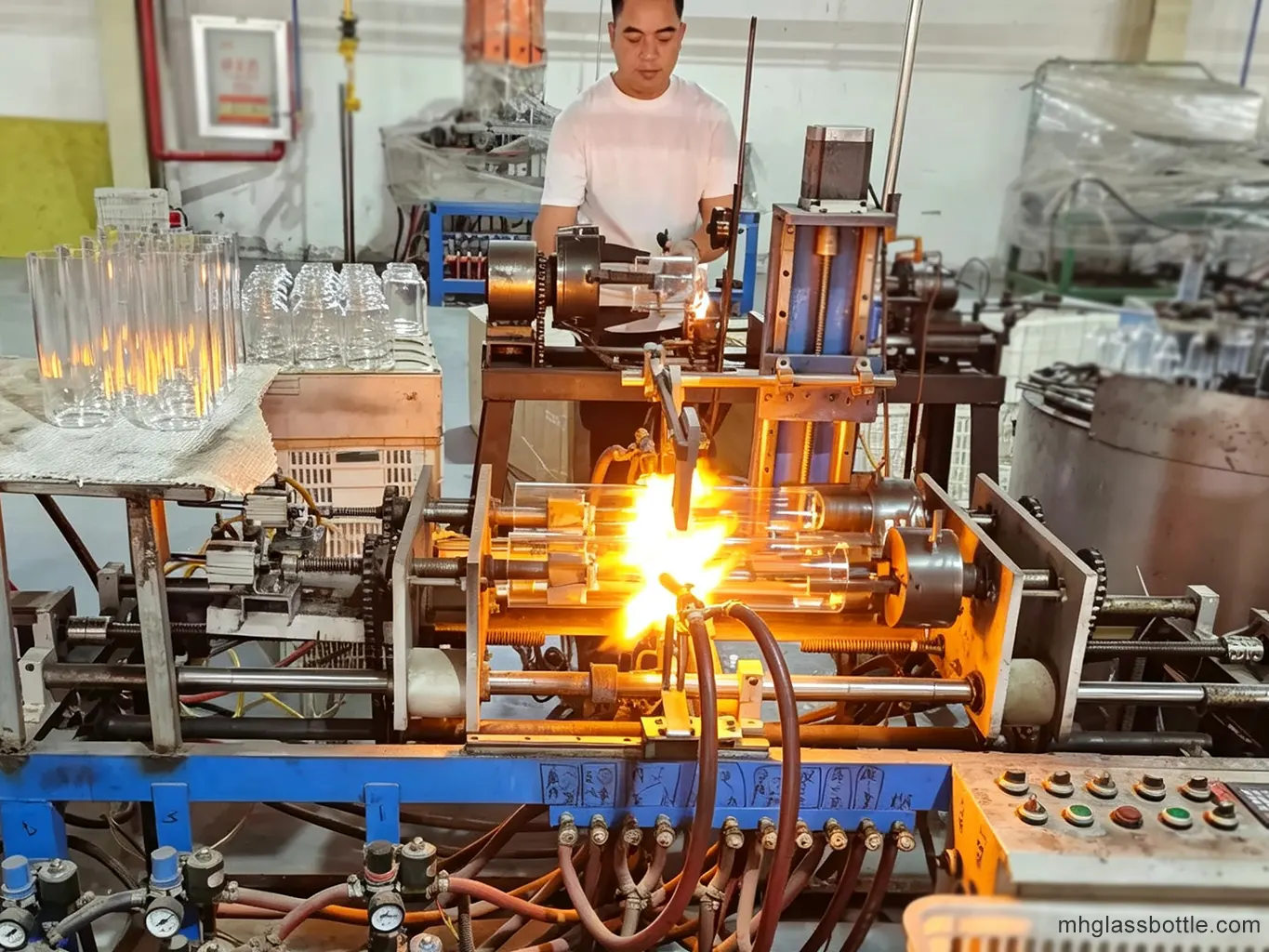
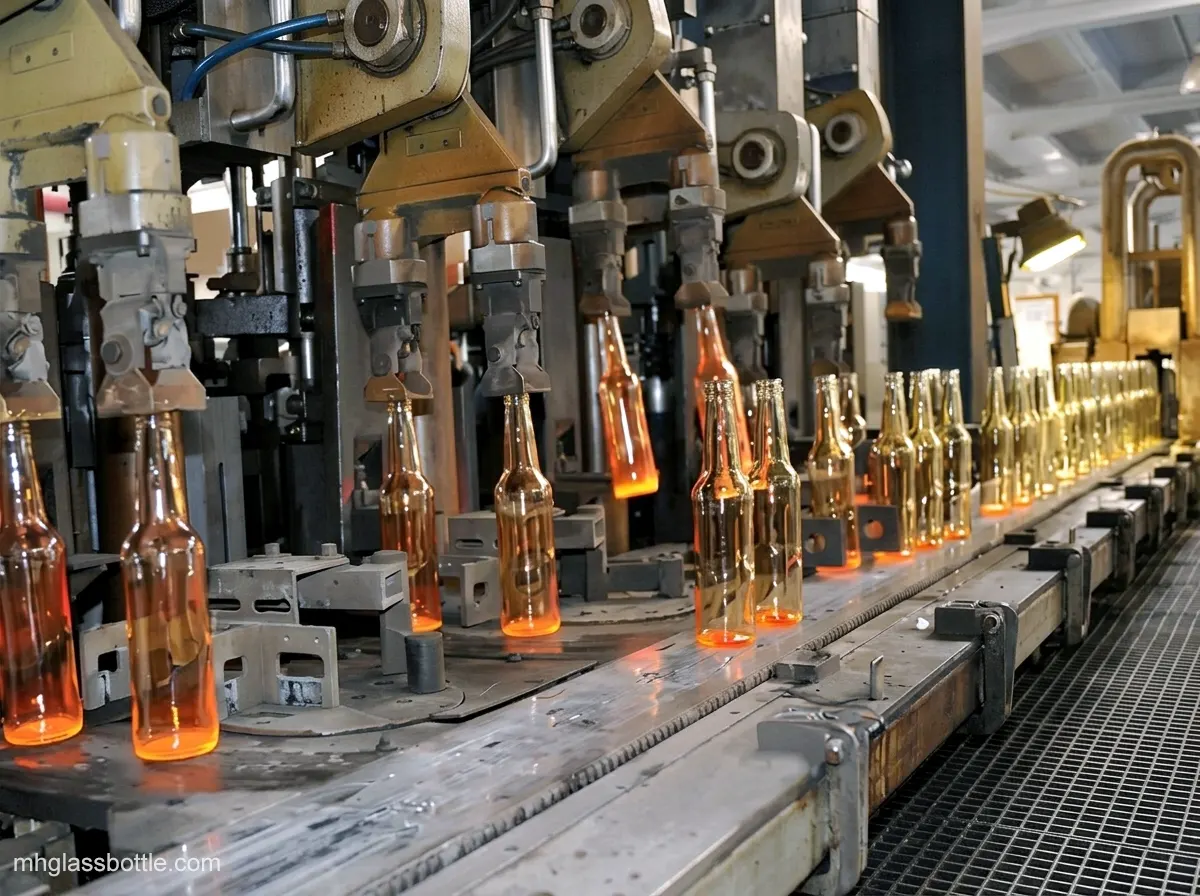
Ask for Factory information, relevant production pictures or video, factory available bottle designs and information on which processes are done in-house. But this is not necessarily a bad thing if the company is a trading business since transparency is required as to who produces the product.
2. Compare technical specifications
Provide each candidate with the same bottle drawing and/or reference sample. Get a quote in writing with all of the details including capacity, weight, neck finish, closure, tolerances, packaging, and customization.
3. Test samples prior to approval
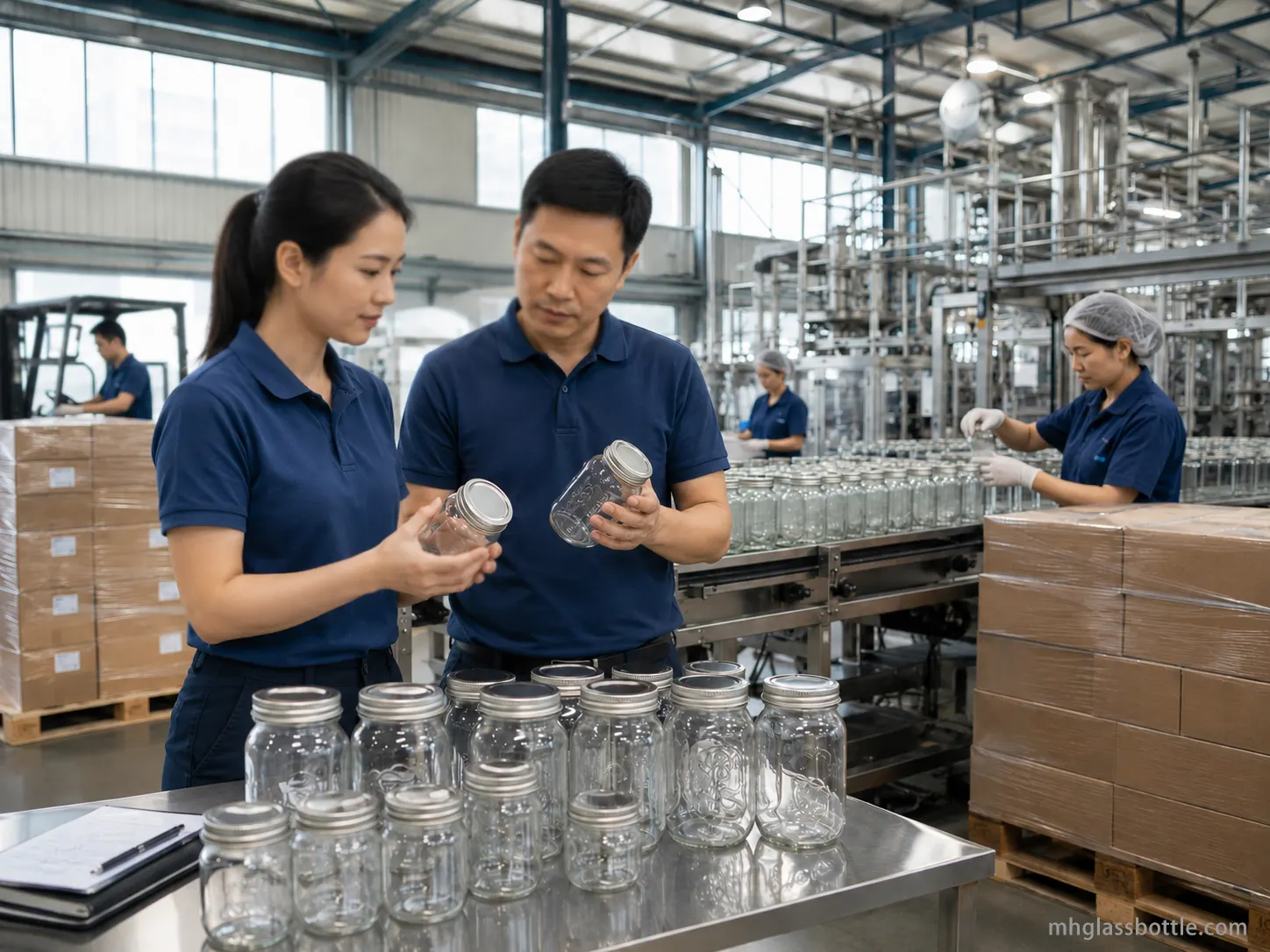
Inspect size, closure fit, cosmetic flaws and compatibility with intended filling and handling procedure. Test the product as required for the intended application, and not just by a supplier's sample test.
4. Calculate the landed cost
Analyse cost of bottle, cost of molds, cost of closures, protective packaging, freight, insurance, import duties and breakage. Have the same terms and volume of orders in each quotation.
5. Confirm repeat-order controls
Set up approved sample, critical dimensions, acceptable defect criteria, change control process, lead time, and process for reordering defective items prior to reordering.
Compute landed cost
To avoid a low quotes concealing hidden and extra costs there is the following framework to help:
| Cost component | What to include |
|---|---|
| Bottle purchase | Unit price × ordered quantity |
| Customization | Mold charges, embossing, or decoration |
| Closures | Caps, liners, seals, and related components |
| Export packaging | Cartons, dividers, pallets, and protection |
| Logistics | Inland transport, freight, insurance, and destination handling |
| Import charges | Applicable duties, taxes, and customs fees |
| Quality losses | Expected breakage, defects, and replacement costs |
For example, if 10,000 bottles cost $0.40 each, the bottle subtotal is $4,000. Other costs excluded are additional packaging, freight, etc. which total $2000, bringing the total cost to $6000, or $0.60 per bottle.
This is a representative estimate, not an actual price. The goal of its implementation is to have a similar cost base for competing suppliers.
Questions to Ask Before Placing a Bulk Order
The first quotation is just a starting point. Prior to approving a supplier, we would want clear answers to these questions:
- Is the quoted bottle a standard or a made to order product?
- What is MOQ for Stock bottle, Custom moulds, Decorated bottles?
- What written instructions are there regarding who is responsible for the mold, how it is stored, maintained, and used again in the future?
- Is it possible to get samples from the production process?
- What are the production lead time and shipping lead time?
- What are the inspections we have and how are faults recorded?
- How will the change in the bottle and/or glass, closure, or manufacturing site be communicated?
- What if a shipment fails to fulfill terms of the acceptance criteria, what can be done to reduce the issues?
Beware of custom-mold deals, especially. A buyer should be aware of who owns the mold, whether it can be transferred and whether the supplier could use the mold for other customers. These terms can be more important in the long run than the slight difference in unit price.
Frequently Asked Questions About Glass Milk Bottle Suppliers
What is the difference between glass milk bottle supplier and producer of the glass milk bottle?
A glass milk bottle supplier is a business that supplies glass bottles to buyers, and a glass milk bottle manufacturer will produce the glass bottles via its manufacturing process or under its control. Suppliers may be manufacturers, distributors, wholesalers or trading companies, and it's essential that the buyers determine who is really manufacturing the bottles and who is responsible for their quality control.
How to find the best Glass Milk Bottle Manufacturers?
Top glass milk bottle manufacturers should be the one who consistently meets your specification, provide the necessary food contact documents, have suitable production capacity and can provide the total landed cost with competitive price. When selecting a supplier, select several candidates using the same bottle drawing, quantity, closure requirements, delivery time and quality specifications.
What is the normal order quantity for the glass milk bottles wholesale?
The minimum order quantity (M.O.Q) for wholesale glass milk bottles is the lowest amount of bottles that a supplier will accept for a specific product and order. The MOQ varies depending on the stock bottle, custom molds and special colours or decorated stocks have different requirements for production and stock. Ask for quotes on different MOQs for the standard products and custom quantities.
Is it worth the extra expense to buy custom glass milk bottles?
Custom Glass milk bottles are made or altered to fit a brand's special needs, including embossed logos, unique shapes, unique colours, or unique dimensions. They can assist a dairy brand with creating an identifiable packaging but the costs of mold, minimum production levels, development time and inventory requirements should outweigh the commercial value of the package.
What kind of certificates should a glass milk bottle supplier possess?
The relevant certifications/compliances that should be followed by a glass milk bottle supplier will vary depending on the intended market, glass bottle design and the purpose of the glass bottle. The buyer is responsible for checking whether the food contact requirements are met; to request supporting material documentation; and to evaluate the supplier's quality management system. A general quality certificate is not sufficient to ensure that all bottles and closures are acceptable for milk packaging.
Can it be cheaper to purchase glass milk bottles directly from the factory?
The price of buying from glass milk bottle factory can save some middleman prices, but it can't ensure the least price for buying. Orders at the factory may have higher MOQs, longer production lead times, and greater inventory obligations, while wholesalers might provide smaller orders or bulk deliveries. Make comparisons before deciding; on total landed costs and on the nature of service required.
Determine a glass milk bottle provider that is able to match your enterprise
Not all suppliers are the same – they don't always have the biggest factory, the lowest advertised prices, or the most impressive catalog. It's the one that can deliver what you need technically, record the applications of the product, keep a constant product quality and back your projected order volume for the long haul.
While looking for Glass Milk Bottles for a dairy brand, food packaging company, or distribution process, be sure to create a clear specification sheet and solicit similar quotations from reputable manufacturers and wholesalers.
Get a sample of the product approved, closure check, compliance paper work, and landed cost. Those steps offer a much better ground for selecting suppliers than just price comparisons.
 ONLINE