EN
EN AR
AR BG
BG HR
HR CS
CS DA
DA NL
NL FI
FI FR
FR DE
DE EL
EL HI
HI IT
IT JA
JA KO
KO NO
NO PL
PL PT
PT RO
RO RU
RU ES
ES SV
SV TL
TL IW
IW ID
ID LV
LV LT
LT SR
SR SK
SK SL
SL UK
UK VI
VI HU
HU TH
TH TR
TR FA
FA GA
GA LA
LA MI
MI MN
MN

Three words first.
Glass still wins.
I've spent years talking with beverage startups, dairy processors, and private-label buyers. Most purchasing teams initially compare glass against PET almost entirely on unit cost, but after watching products succeed—or quietly disappear—from supermarket shelves, I rarely see packaging decisions driven by manufacturing cost alone. Shelf presence, consumer trust, recycling policies, filling compatibility, and repeat purchase behavior usually become the factors nobody calculated in the first purchasing meeting.
So why are experienced beverage brands returning to glass when plastic is often cheaper?
Because consumers are listening.
The 2024 Food & Health Survey conducted by The International Food Information Council (IFIC) reported that packaging sustainability remains a factor for many consumers' purchase decisions, especially for younger consumers who are looking for reusable or recyclable packaging. To read the report go here: https://foodinsight.org/2024-food-and-health-survey/
Meanwhile, governments are taking an ongoing hard stance against single-use plastics. The U.S. Environmental Protection Agency (EPA) is promoting sustainable materials management programs in the country, which further supports circular packaging, and expanding the scope of its national recycling programs: https://www.epa.gov/smm
That alters purchasing economics much quicker than some suppliers will acknowledge.
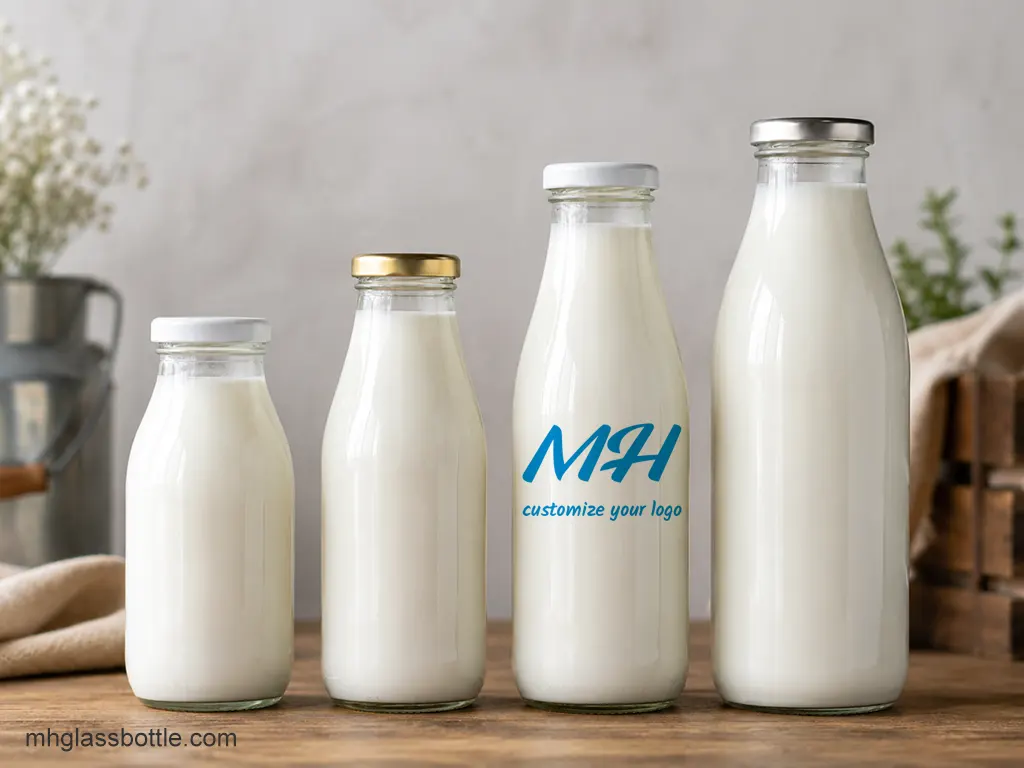
The reasons of Glass Milk Bottles become premium packaging again.
I have one common industry opinion I don't agree with.
Glass does not appear to be returning due to a fondness for the past.
That's marketing.
The truth is much more mundane.
While these beverages don't need to be spoken to make a quality impression, there are a number of premium-style beverages that demand a package that gets the message across without having to use words – cold brew coffee, oat milk, almond milk, fresh juice, probiotic beverages, kombucha, flavored milk and farm-fresh dairy are all examples of these categories. That's what a heavy glass bottle is all about.
Weight links up with worth in consumers' subconscious.
Retail buyers are acquainted with it.
Brand owners do know it.
Unfortunately, many manufacturers still give quotes based on the assumption that all customers are just interested in getting the cheapest container.
This attitude typically results in commodity products.
Premium brands do not wish to have commodity packaging.
When buying Glass Milk Bottles for wholesale, what buyers really look at.
Price matters.
All the rest depends on the product's survival.
As a wholesale glass bottle supplier, I recommend you consider six parameters when looking at glass bottle suppliers rather than only FOB price.
| Evaluation Factor | Why It Matters | Recommended Standard |
|---|---|---|
| Glass Quality | Prevents breakage during transport | Food-grade soda-lime glass meeting FDA/EU food-contact requirements |
| Bottle Weight | Balances durability and logistics cost | 300–700 g depending on capacity |
| Neck Finish | Determines cap compatibility | Standard Twist-Off or Lug finish |
| Decoration | Supports premium branding | Screen printing, frosting, spray coating, embossing |
| MOQ | Impacts inventory risk | 3,000–20,000 pcs depending on customization |
| Lead Time | Affects product launch | 30–50 days for custom production |
Notice what's missing.
Bottle price.
That's intentional.
If the packaging looks generic, then your product probably won't convert to retail and saving $0.03 per bottle is insignificant.
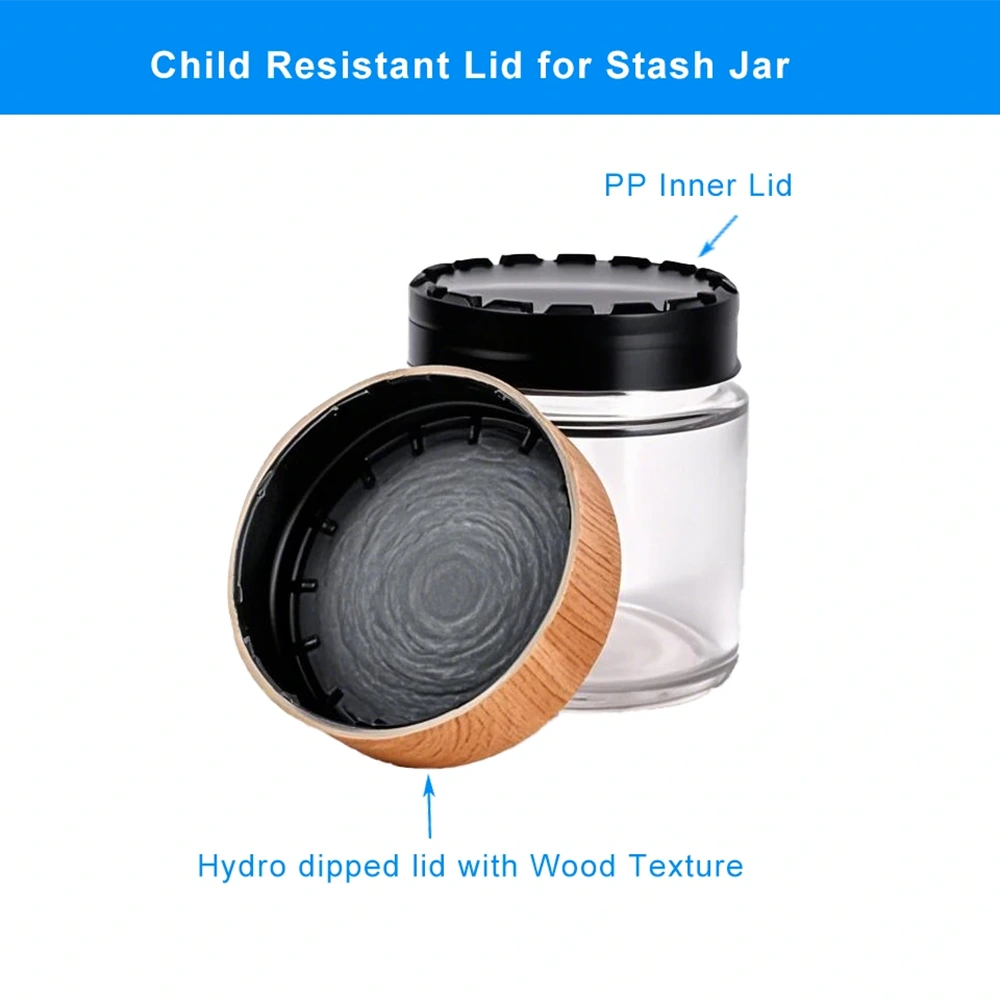
Small Parts, Great Impact: Glass Milk Bottles with Lids
Wearing caps isn't very interesting.
It isn't.
The dimensional tolerances of the bottle supplier were not the same as the closure supplier and entire export shipments were delayed as a result.
A good glass milk bottle with lids must be assessed as a whole package system and not as two different products.
There are some common closure options available, such as:
- Metal Twist-Off lids
- Lug caps
- Aluminum screw caps
- Tamper-evident closures
- Silicone gasket swing tops
- PP plastic screw caps for Refrigerated Beverages.
Each shows different characteristics when hot filled, cold filled, pasteurized or pressurized.
This compatibility is not something that is taken into account by many people.
Custom Glass Milk Bottles: Packaging is becoming Product Identity
One thing you do not want to underestimate as a purchasing manager is…
Consumers remember shapes.
Not specifications.
Consider some well-known brands of drinks.
You'll remember this bottle before you remember the nutrition panel.
This is why custom glass milk bottles are still making the rounds of high end beverage companies.
Most customizations options mentioned are:
- Embossed logos
- Custom bottle silhouettes
- Frosted finishes
- Gradient spray colors
- Silk-screen printing
- UV decoration
- Ceramic printing
- Custom capacity (250 ml, 330 ml, 500 ml, 750 ml, 1000 ml)
- Unique shoulder profiles
- Exclusive mold development
There is of course an issue with the high investment in tools for custom molds, but direct comparison of price with competitors is just as difficult.
This is typically a competitive edge.
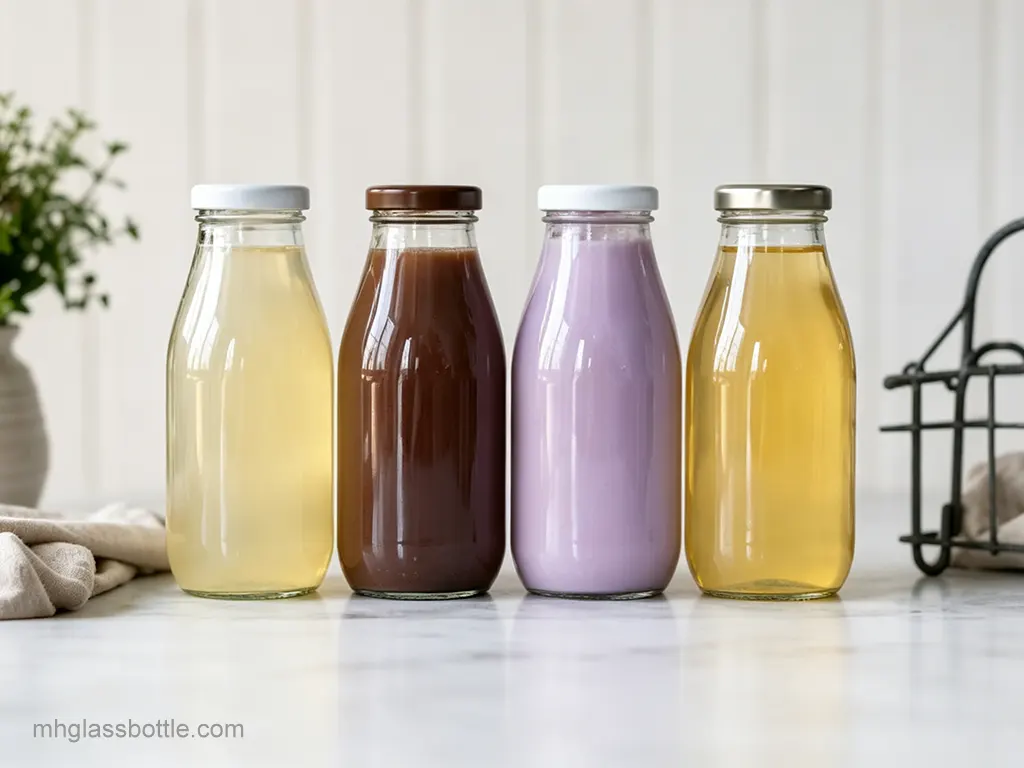
Bulk Glass Milk Bottles vs Stock Bottles
That's when procurement turns into strategy.
Many buyers assume ordering bulk glass milk bottles automatically lowers costs.
Sometimes.
Not always.
Stock bottles remove the costs of mold and shorten the lead time.
In addition to investment, custom bottles have the advantage of brand awareness.
This is a comparison I normally make.
| Option | Advantages | Disadvantages | Best For |
|---|---|---|---|
| Stock Bottle | Lower MOQ, faster delivery | Limited differentiation | Startups |
| Semi-Custom Bottle | Moderate branding flexibility | Some design limitations | Growing regional brands |
| Fully Custom Bottle | Strong brand identity, exclusive design | Higher tooling investment | National beverage brands |
The right answer isn't really based on the volume of annual output, it's about branding your production over the long term.
The reusable Glass Milk Bottles are designed to fit the Circular Economy
Consumers keep them.
That's valuable.
Re-use packaging minimizes the need for replacement and enhances brand visibility within consumers' homes.
Historical models of milk delivery are driving many dairy companies to consider bottle return systems.
The Ellen MacArthur Foundation states that reusable packaging systems can drastically cut down on packaging waste if the collection and redistribution system are efficient enough: https://www.ellenmacarthurfoundation.org/topics/plastics
Notice the condition.
Efficient infrastructure.
Logistics is the key to make ReUs systems affordable or it's just an expensive decoration.
What you need to know about picking Glass Milk Bottles for beverage brands.
I have a fairly simple checklist.
Not due to the simplicity of sourcing.
Complexity tends to camouflage the obvious errors.
When you're asking for quotations, first define:
- Beverage type (milk, juice, coffee, kombucha, yogurt drink)
- Filling temperature
- Pasteurization process
- Capacity
- Distribution channels
- Labeling method
- Decoration requirements
- Annual purchasing volume
- Export destination
- Regulatory requirements
Quotes should be prepared by suppliers only after this.
Otherwise, all the quotations will be used to compare other products.
Hence, sometimes buyers pay five different amounts for what may seem to be the same bottle.
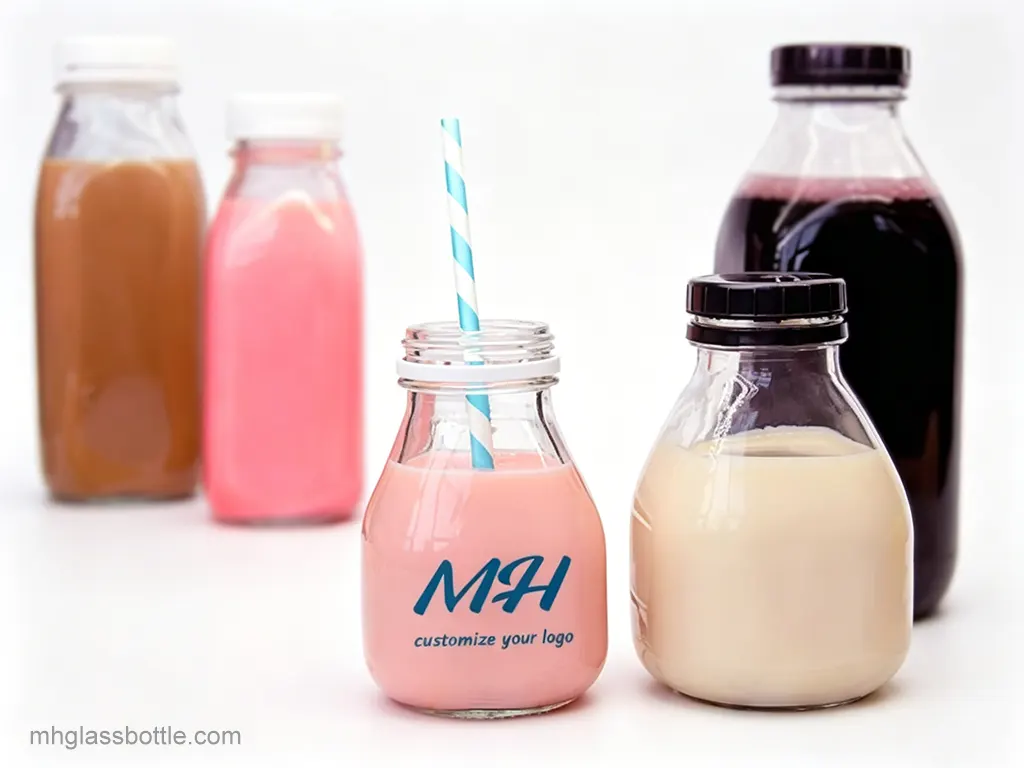
Best Glass Milk Bottles for Milk and Beverages: Milk and beverage bottles are made of glass
There are different engineering priorities for different drinks.
| Beverage | Recommended Bottle | Capacity |
|---|---|---|
| Fresh Milk | Round clear bottle | 500 ml–1000 ml |
| Flavored Milk | Custom embossed bottle | 250 ml–500 ml |
| Cold Brew Coffee | Amber bottle | 330 ml |
| Kombucha | Pressure-resistant bottle | 330 ml–500 ml |
| Fresh Juice | Square bottle | 250 ml–750 ml |
| Plant-Based Milk | Premium custom bottle | 500 ml–1000 ml |
There is no one "best" bottle.
Only the top bottle for your filling line, logistics system and customer positioning.
That's enough to save companies thousands of dollars annually.
Frequently Asked Questions
What does glass milk bottles mean?
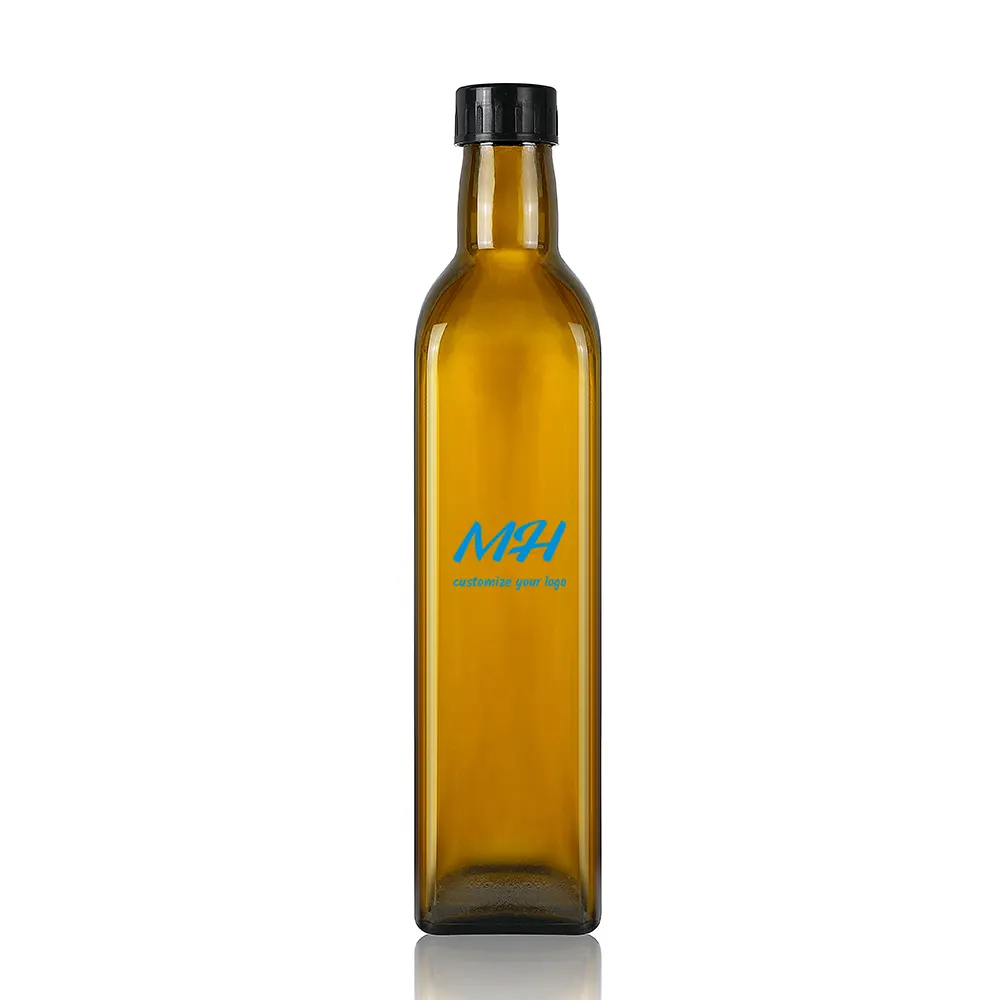
Glass milk bottles are food-grade glass bottles that are designed to store, transport and retail milk and other beverages, providing chemical stability, great product visibility, convenient closures and long-term recyclability, and enhancing premium brand positioning in the commercial beverage market.
Most are manufactured from soda-lime glass and sizes vary from 250ml to 1 litre or more and are printable, embossable or specialty materials can be coated.
What are the features to be taken into account when it comes to wholesale glass milk bottles?
Wholesale glass milk bottles are not evaluated by unit price, but the quality of the glass, the dimensional uniformity, the type and quality of closures, ability to decorate, production capacity, regulatory requirements and supplier reliability, etc. are all important factors that affect the filling efficiency, transportation capacity, and overall appearance of the bottle.
Always request production samples, packaging information and quality inspection reports prior to mass production.
Is glass milk bottle more environmentally friendly than plastic?
Although they are heavier and more expensive to transport than plastic bottles, their reusable glass bottles offer superior chemical resistance, product quality (perception), long life and can be recycled multiple times.
They have the most potential in high value retail, local distribution and refill schemes where the logistics costs are offset by the reuse.
Are there manufacturers that can create custom glass milk bottles?
The custom glass milk bottles are produced in dedicated bottles' molds and enable beverage companies to stamp out unique bottle shapes, embossed logos, custom finishes, and proprietary branding elements that are difficult to replicate by their competitors, which adds to greater bottle recognition on the shelf and lasting brand differentiation.
Most factories also provide custom closures, printing, decals, frosting and packaging options for bottles.
Final Thoughts
Packaging speaks first.
Your beverage only gets a chance to speak second.
This is something that the best beverage brands know. They aren't buying bottles, they are buying perceived value, customer trust and brand recognition. When you are considering purchasing wholesale glass milk bottles, creating custom glass milk bottles, or perhaps creating a reusable packaging program, the “best” buy isn't always the lowest buy.
Looking to buy top-quality glass milk bottles for your beverage business? Talk to our manufacturing team about custom printing, wholesale rates, decorating and packaging for your production and market objectives.
 ONLINE